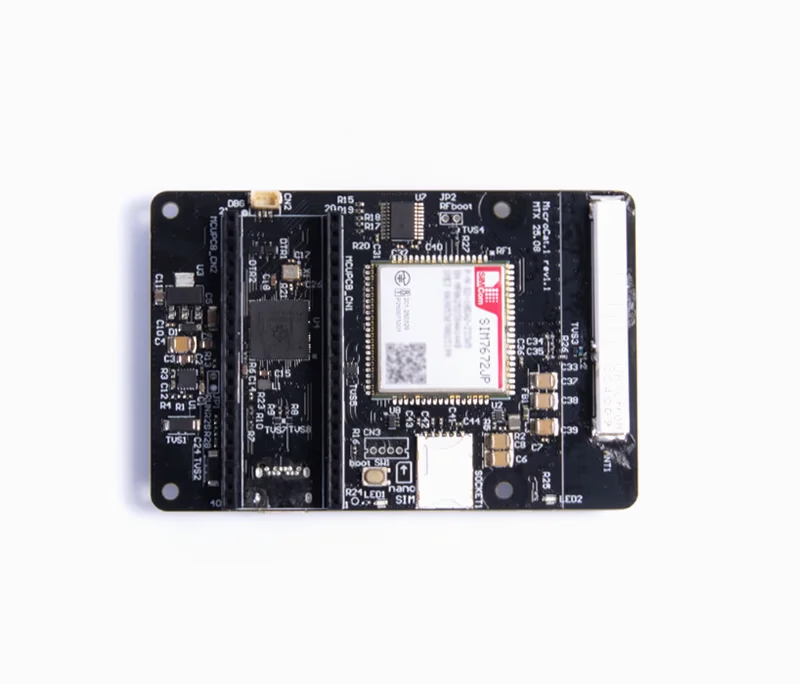
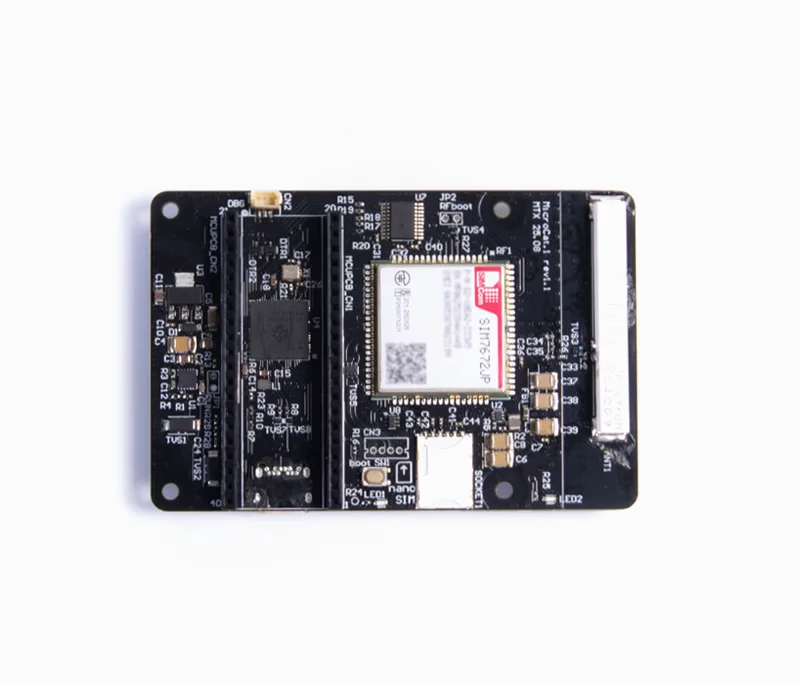
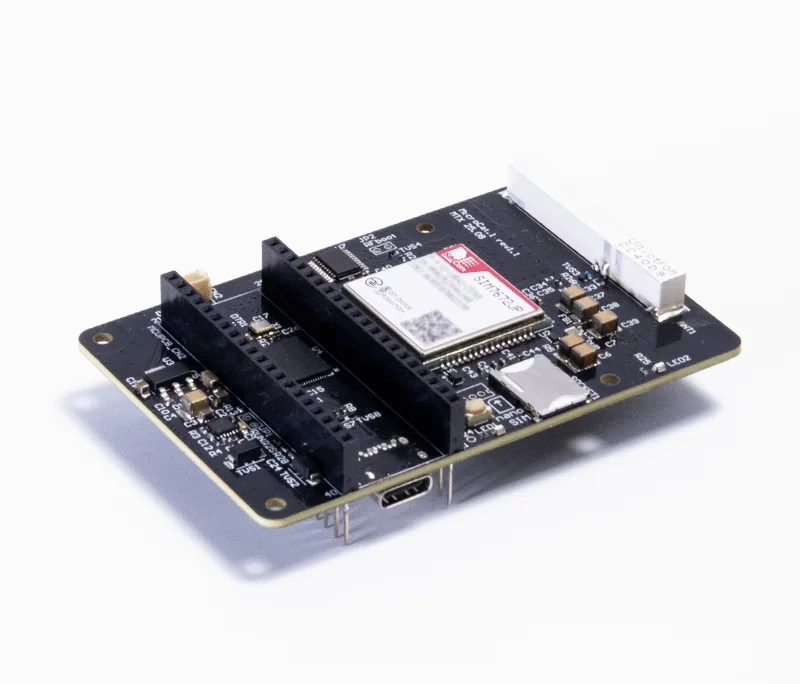
Get LTE Running Instantly with MicroPython. Checking MicroCat.1 (Pre-release) Specs
Mechatrax announced the "MicroCat.1 (Pre-release)". Integrating RP2350B + LTE Cat.1 bis module, it's a MicroPython microcontroller board for jumpstarting cellular IoT prototypes. Pre-flashed with PPP-enabled firmware, the ability to communicate right out of the box is its biggest appeal.
Mechatrax announced/released the MicroCat.1 (Pre-release) on Dec 16, 2025. Product info is on the official store/press release.
It’s a MicroPython microcontroller board integrating RP2350B and LTE Cat.1 bis module SIM7672JP, hitting the spot for those wanting the shortest path to cellular IoT prototyping.
Note that it’s a pre-release version, so specs may change, and power consumption is currently TBD.
RP2350B + LTE Cat.1 bis + PPP MicroPython integrated on an 85x56mm board.
Key points: Pre-release status (Current TBD) and Onboard Antenna (Requires RF care in enclosures).
Features
Main Components
Combines RP2350B (Higher-end than Pico 2’s RP2350A) and SIM7672JP (LTE Cat.1 bis).
RP2350 side runs Dual Cortex-M33 @ 150MHz. Not “Linux”, but “Real-time MCU”. Ideal for classic IoT: Collect Sensors -> Send Cloud -> Sleep.
Memory & Storage
RAM: 520kB + 8MB. ROM: 16MB.
Note: Some early exhibition info had typos (“16GB/8GB”), but official store clarifies MB. It’s a microcontroller, not a PC.
Usage: Collect data via MicroPython, send via LTE, buffer locally on failure.
Network (LTE Cat.1 bis)
SIM7672JP supports max 10Mbps (DL) / 5Mbps (UL). Docomo/au IOT tested.
Bands: B1/B3/B8/B18/B19/B26.
Practical speeds depend on signal/contract. “Max 10Mbps” is just a ceiling.
Software (PPP MicroPython)
Pre-flashed with PPP-enabled MicroPython firmware. SIM7672 control libraries also provided.
“Buy it -> Talk via MicroPython -> Connect” loop is optimized. Huge plus for prototyping speed.
Power: USB-C 5V. Current is TBD. Wait for measurements before planning battery ops.
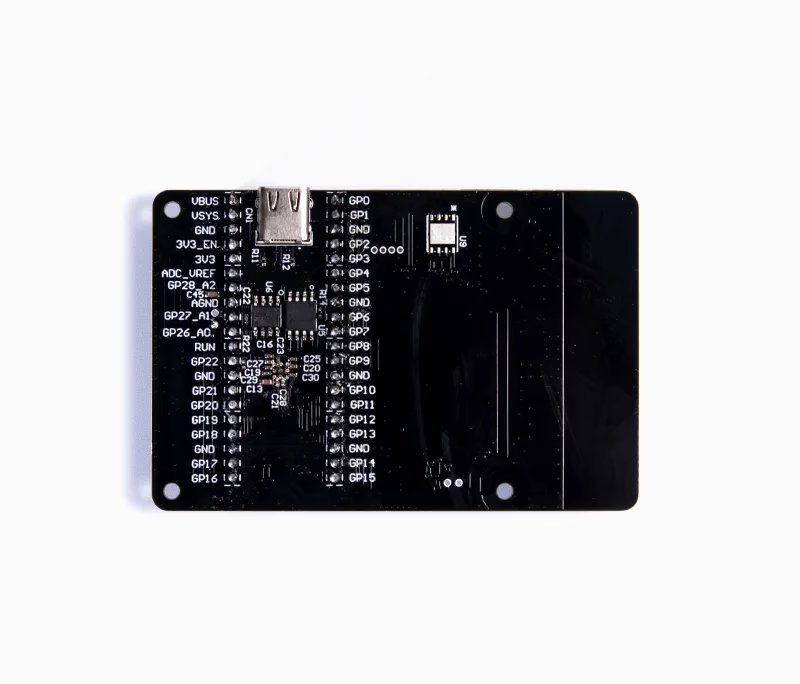
I/O: GPIO (Pico 2 compatible), nanoSIM, USB-C.
Summary
MicroCat.1 (Pre-release) is a shortcut for those who want to “Shape LTE communication with MicroPython ASAP”.
Pre-flashed PPP support makes the “First Connect” extremely fast.
Suited for: Quick prototyping of field IoT.
Not suited for: Those needing a finished product (Case/Cert/Mass-prod ready) immediately.
Personally, “One board to Cellular” is strong. Just RF test the enclosure early.
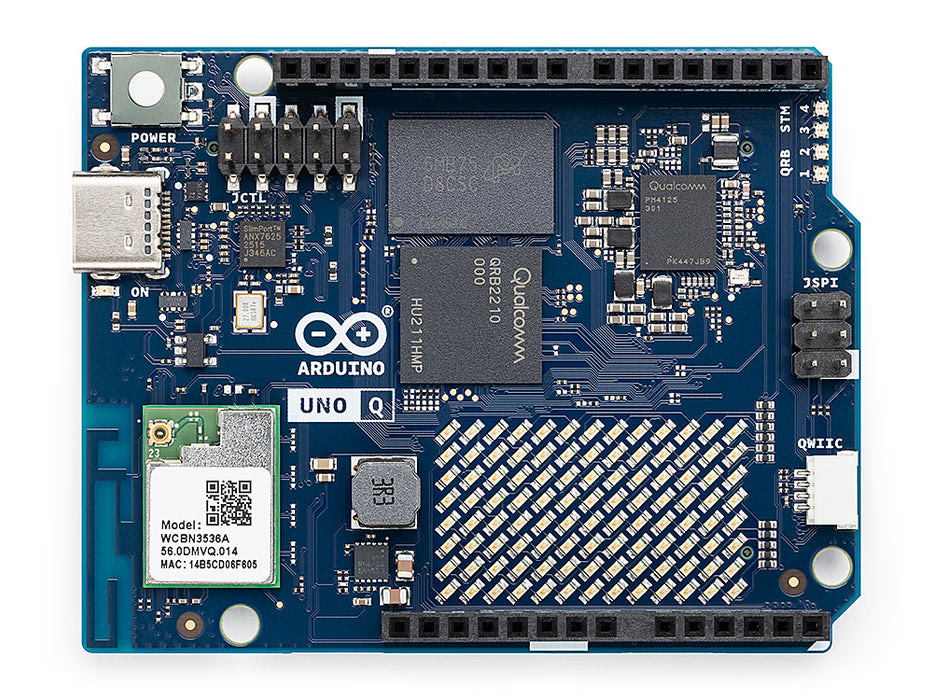
Arduino announced the "Arduino UNO Q" on October 7, 2025. This UNO-form development board features a "dual-brain" architecture running Debian Linux on a Qualcomm Dragonwing QRB2210 while also supporting Arduino-compatible (Zephyr) development via an STM32U585. With a streamlined single USB-C port design, it can serve as an SBC, but note that a USB PD (Power Delivery) compatible dongle is required—there are some points to verify beforehand.
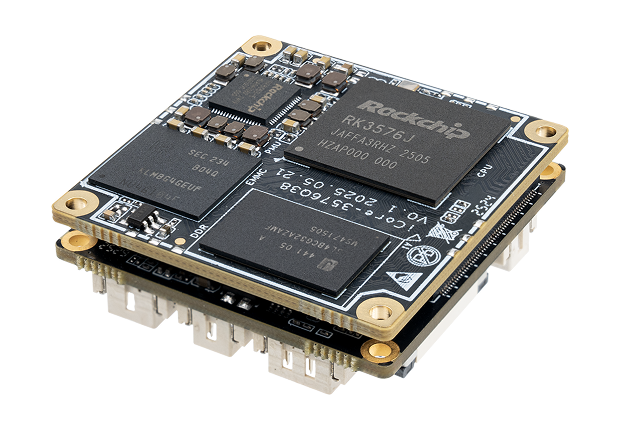
Firefly has announced the CAM-3576Q38, an ultra-compact Mini AI Mainboard. It packs the Rockchip RK3576 (4×A72 + 4×A53) and a 6 TOPS NPU into a 38mm square board, designed for embedded applications in industrial cameras and edge AI devices. With I/O primarily via FPC connectors, it is suited for custom designs intended for mass production.
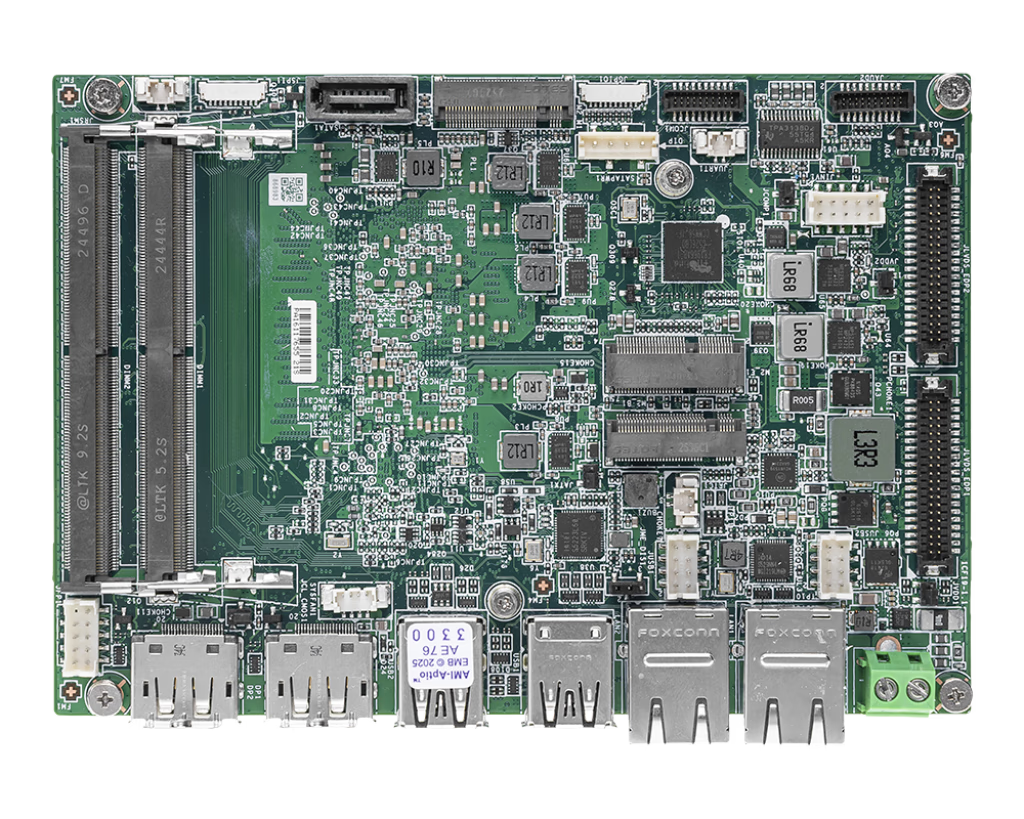
Introducing MSI IPC's industrial 3.5-inch SBC "MS-CF19". Supports Intel Core Ultra (100U/200U), features built-in NPU for Edge AI, and dual LAN (2.5GbE + 1GbE). Designed for fanless operation, it also supports flexible storage expansion with M.2 NVMe and 2x SATA ports.
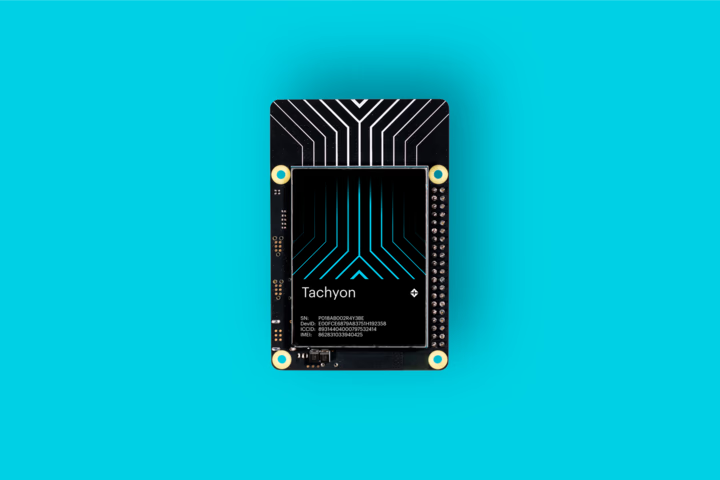
Particle's "Tachyon" is an SBC powered by the Qualcomm QCM6490 (Snapdragon 778G equivalent), condensing 5G connectivity, a 12TOPS NPU, and battery operation into a Raspberry Pi-sized board. With built-in antennas, it excels in field deployments, and its starting price of $249 makes it an attractive option.