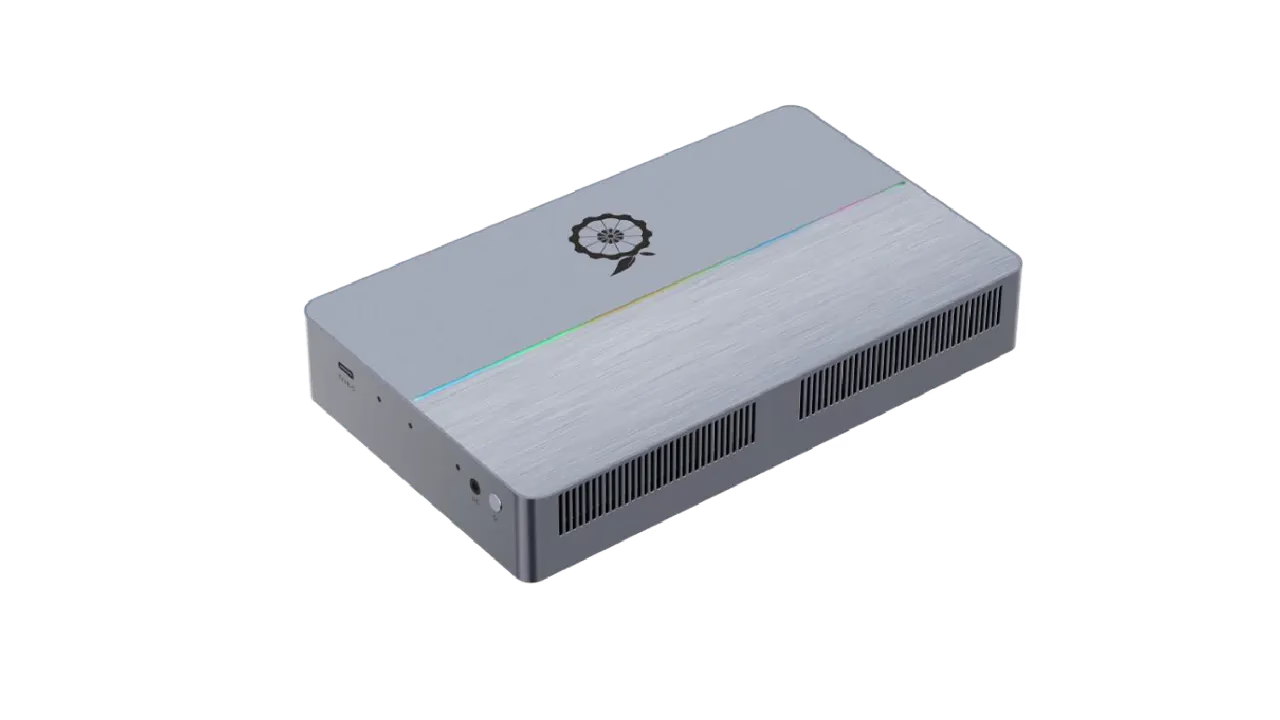
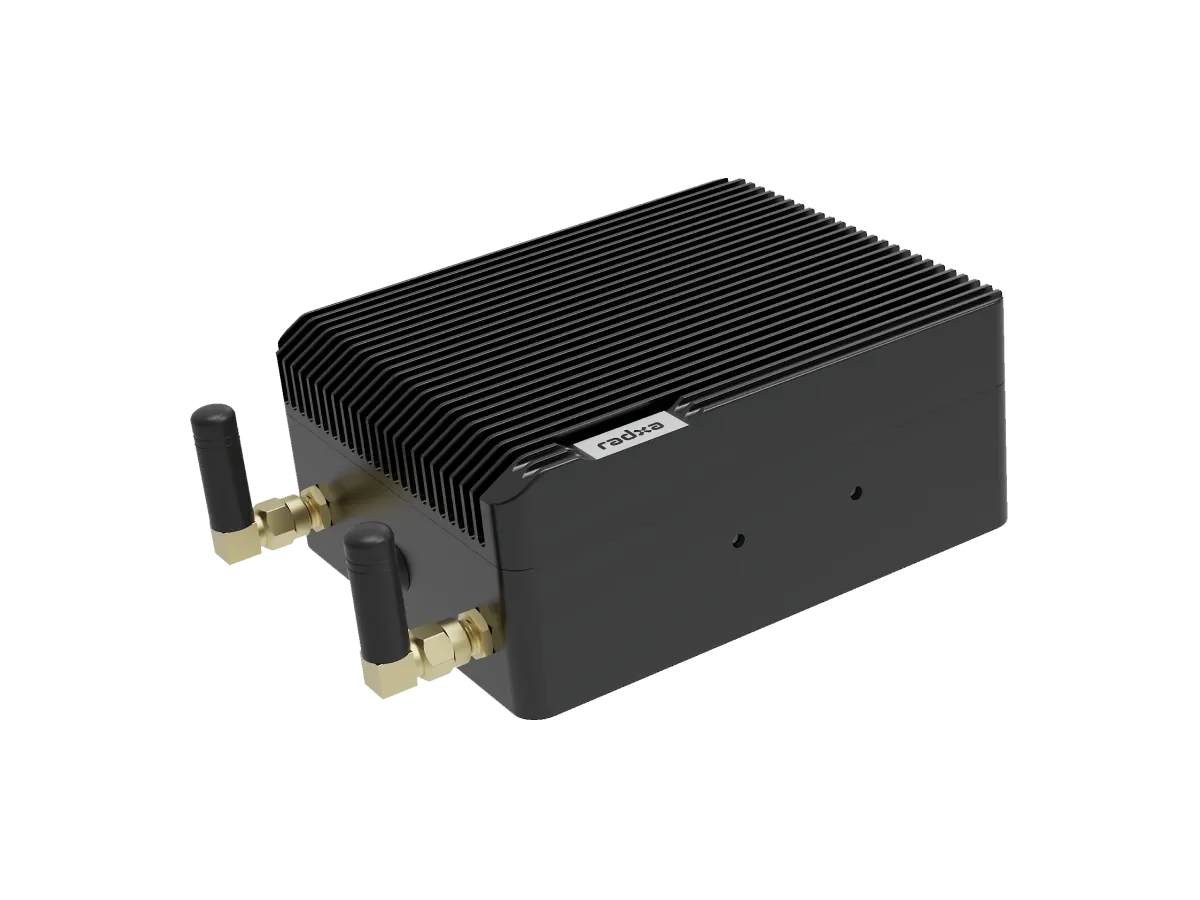
MSI IPC has announced the “MS-CF19,” an industrial 3.5-inch SBC. It supports the Intel Core Ultra (100U/200U) series, featuring a configuration capable of edge AI processing via the built-in NPU.
The network configuration includes dual LAN with 2.5GbE (Intel I226-V) and 1GbE (Intel I219-LM), making it suitable for uses such as gateways and log collection servers. Being an industrial product, the price is based on quotes, but if you want to utilize the Core Ultra generation NPU for embedded devices or edge applications, it is worth considering.
Specs
| ■ MSI MS-CF19 | |
|---|
| CPU | Intel Core Ultra 200U/100U Series |
| GPU | CPU Integrated (Intel Iris Xe / Arc equivalent, depends on SKU) |
| NPU | Intel AI Boost (CPU Integrated) |
| Memory | DDR5 SO-DIMM x2, Max 64GB |
| Storage | M.2 Key-M (NVMe Gen4 x4), SATA III x2 |
| M.2 Slots | Key-M (2280), Key-B (2242/3042), Key-E (2230, CNVi) |
| Network | 2.5GbE (I226-V), 1GbE (I219-LM) |
| Video Output | DisplayPort x2, LVDS/eDP x2 |
| USB | USB 3.2 Gen2 x4, USB 2.0 x2 |
| GPIO | 8-bit (4 GPI/4 GPO), 5V |
| Power | DC 12-24V (OCP/OVP supported) |
| Size | 146x102mm (3.5 inch SBC) |
| OS | Windows 10/11 IoT Enterprise LTSC |
This industrial board packs a Core Ultra (100U/200U) CPU with built-in NPU, dual LAN (2.5GbE + 1GbE), and M.2 NVMe + 2x SATA storage configuration into a 146x102mm 3.5-inch SBC form factor.
Features
SoC & CPU
The core of the MS-CF19 is its support for the Intel Core Ultra U-series. Supported CPUs include the Core Ultra 100U generation (Core Ultra 7 165U, Core Ultra 5 155U/135U/125U) and the newer Core Ultra 200U generation (Core Ultra 7 265U/255U/235U/225U).
The clear selling point of the Core Ultra generation is that “with the hybrid architecture and NPU (Intel AI Boost), it can efficiently handle edge inference, image processing, and surveillance pre-processing.” For example, the Core Ultra 7 265U is publicly listed as a 12-core configuration (including P-cores, E-cores, and LP E-cores), designed from the start to include AI processing “slots” including the NPU.
However, from an SBC/embedded perspective, the game is not just about performance but also “heat” and “whether I/O can be fully utilized.” The MS-CF19 claims “Fanless/Ultra Low-Power,” and comes with a realistic note that the standard thermal solution supports a max TDP of up to 15W (plus an airflow condition of 0.7m/s). Since the experience can change drastically even with the same CPU name depending on operation (PL1/PL2) and chassis heat dissipation, it is safer to decide “which CPU SKU to choose” and “whether chassis heat dissipation design is possible” first if you intend to use it fanless.
As for benchmarks, scores for Core Ultra 7 265U/165U are available on PassMark and Geekbench Browser. When replacing an Intel N100 class, it should be viewed as a design in a slightly higher range rather than a simple “low-power mini PC equivalent.”
Power & Thermal Design
The power supply is DC-in 12-24V, with over-current/over-voltage protection (OCP/OVP) listed. It is built to accommodate 12V industrial power supplies, differing in philosophy from the 5V power supply of Raspberry Pi type boards. A design that is resistant to dropping even in environments with poor wiring or power quality can be expected.
A concern is the combination of CPU selection and heat. Since the product page states the TDP limit (15W) and airflow conditions for the standard thermal solution, using a high-end SKU for long-duration high loads will likely require chassis heat dissipation and airflow design. To be on the safe side, it is best to evaluate it including the “chassis and heat dissipation” from the start.
Storage Configuration
For storage, M.2 Key-M (PCIe Gen4 x4 NVMe) and two SATA III ports can be confirmed. It allows for a configuration where the system is on NVMe and logs or data are on SATA.
On the other hand, confirmation on “what it can boot from (NVMe/SATA/USB, etc.)” or “recovery procedures (guides for recovery, BIOS settings, OS installation)” could not be found as an official URL like a Getting Started guide. Since AMI BIOS is listed, it is generally assumed that the boot order is determined in UEFI settings, but it is certain to confirm with MSI IPC support or the distributor before introduction.
Expansion Slots
There are three M.2 slots, so let’s organize them first as mix-ups often occur.
- Key-M (2280): For NVMe SSD. Supports PCIe Gen4 x4.
- Key-B (2242/3042): Assumed for LTE/5G. Supports PCIe x1 and USB 2.0.
- Key-E (2230): For Wireless. Supports CNVi (depends on module).
To avoid accidents like buying a Key-M for wireless use, it is safe to create a Bill of Materials based on “Key and Size (2230/2242/2280)” from the beginning.
GPIO is listed as “8-bit (4 input / 4 output), 5V,” but the physical specifications of the pin header, such as whether it is a “standard shape” like the Raspberry Pi’s 40-pin compatible one, could not be confirmed. Since connector shapes are often proprietary in industrial applications, if you are designing an I/O board or harness, it is safe to obtain the drawing (pin definition) before purchasing.
Network & Video
The network is a 2-port configuration with 2.5GbE (Intel I226-V) and 1GbE (Intel I219-LM). It is easy to configure for gateway use where you want to separate WAN/LAN, or keep one for management.
There is no mention of on-board wireless, so it seems to assume configuration via M.2 Key-E (CNVi). Regarding radio certification for Japan, if the board itself does not have wireless, the point of contention shifts to the module side, but for domestic operation, it would be safe to design by adopting a certified module.
Video output is a “embedded display oriented” configuration with DisplayPort x2 plus LVDS/eDP x2. It seems to assume uses handling multiple panels in digital signage or equipment integration. Max resolution is listed as 4096x2304@60Hz for each system, but since actual operation depends on OS/driver and simultaneous use conditions, prior verification is recommended if requirements are strict.
The OS is listed as Windows 10 IoT Enterprise 2021 LTSC / Windows 11 IoT Enterprise LTSC, and Linux is “Support by request.” It doesn’t seem to be the vibe of official Linux image distribution, so checking the scope of driver provision via the distributor at the time of evaluation is desirable.
Exterior
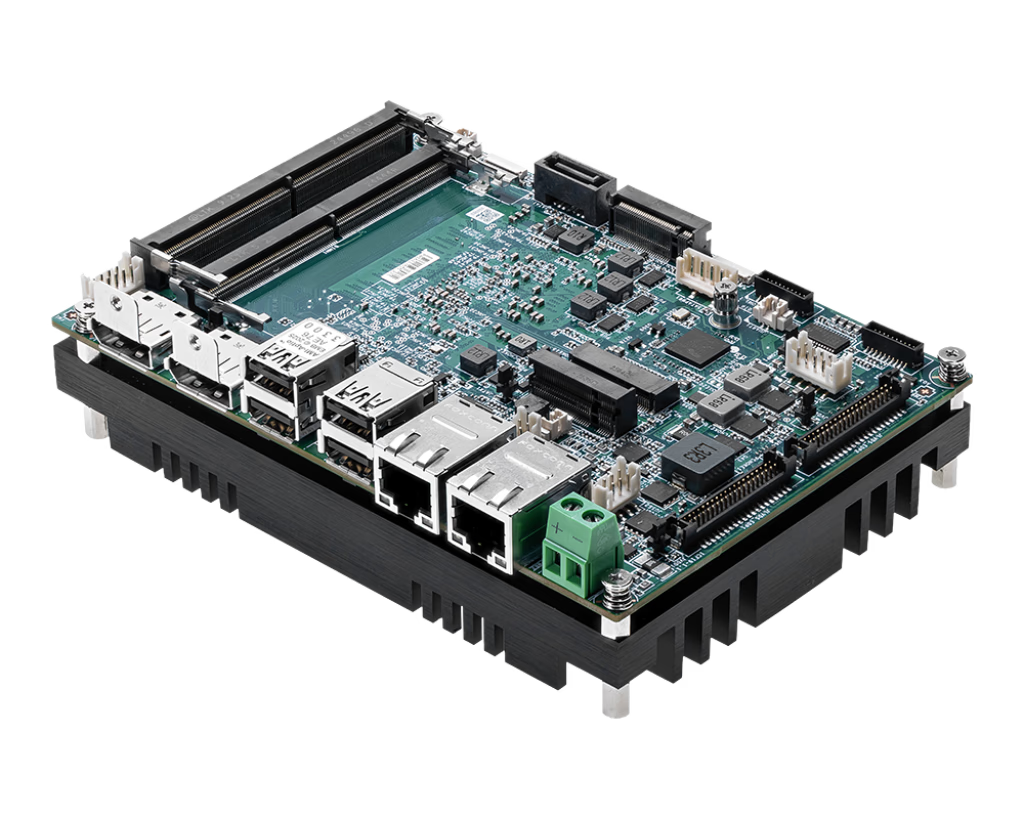
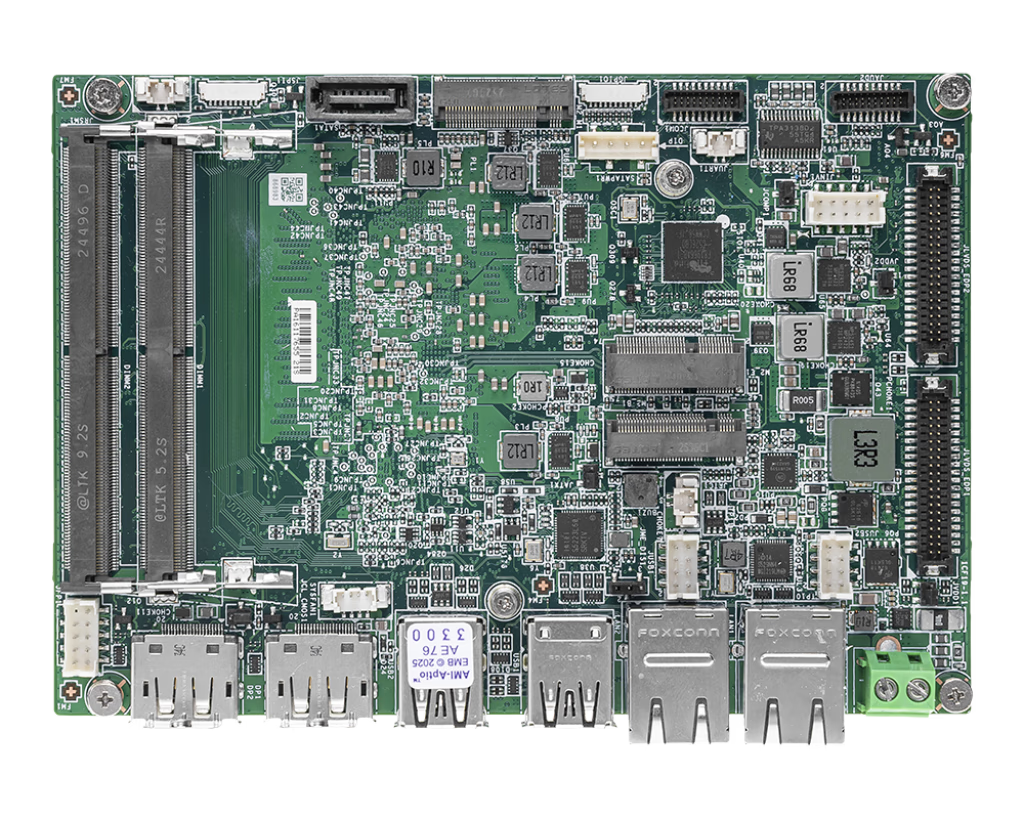
Board Top: SO-DIMM slots x2, M.2 slots, and main I/O like LAN/USB/DP are grouped on the same side
You can see that two SO-DIMM slots, M.2 slots, and main I/O like LAN/USB/DP are gathered on the same surface. Typical for industrial use, the connector density is high. When putting it in a case, it would be safe to estimate the opening on the I/O side and the bending radius of the cable first.
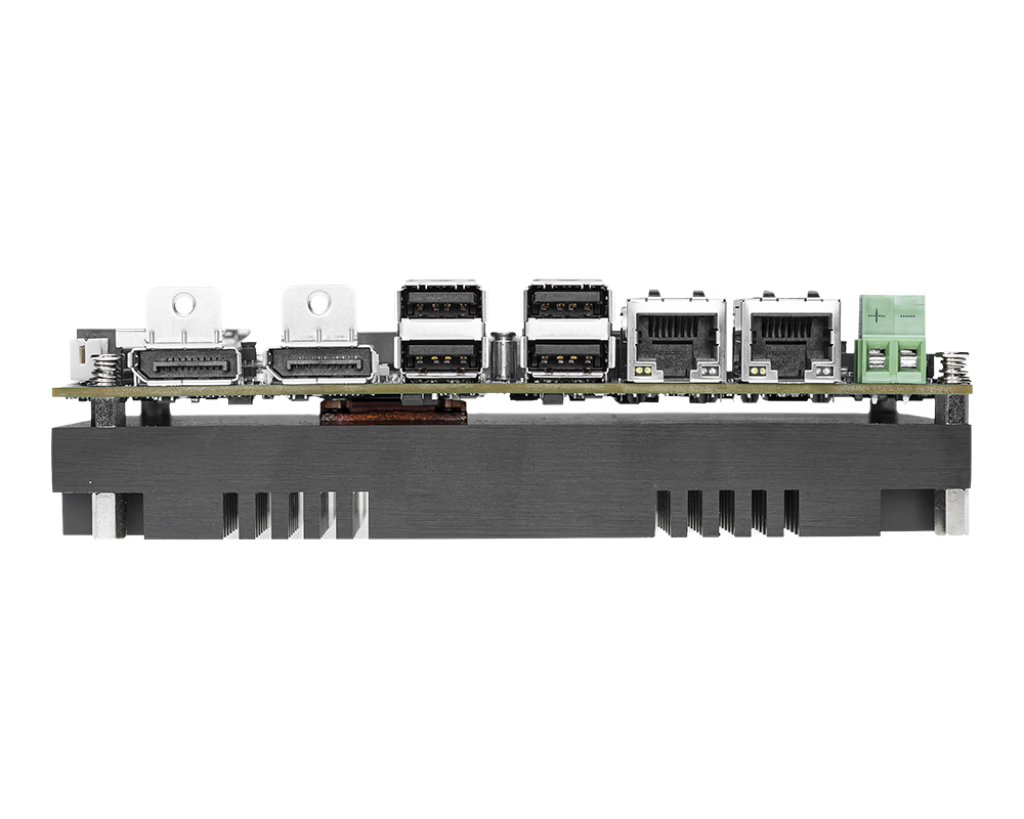
Port Side: Layout with DisplayPort x2, USB Type-A group, and RJ45 x2 lined up in a row
A layout where DisplayPort x2, USB Type-A group, and RJ45 x2 are lined up in a straight line can be confirmed. Since “port row height” and “connector insertion/removal space” affect equipment integration, care must be taken during panel design.
Summary
MSI IPC’s “MS-CF19” is an industrial 3.5-inch SBC that supports Core Ultra (100U/200U) with included NPU, plus 2 ports of 2.5GbE and 1GbE. With DisplayPort x2 + LVDS/eDP x2 for video, it looks like a design more for equipment than a so-called “mini PC”.
The price is not public, but characteristically it will be a quote-based component. Looking at the configuration of 2.5GbE, NVMe, and SATA x2, it seems to hit the mark for edge gateway or small log collection server applications. Conversely, those who want to run high-end SKUs assuming fanless operation should consider it as a set with chassis heat dissipation design, keeping in mind conditions like “Max TDP 15W” on the product page.
| Purchase from | Price | Note |
|---|
| MSI IPC (Where to Buy) | Quote-based (Inquire) | Industrial sales channel |