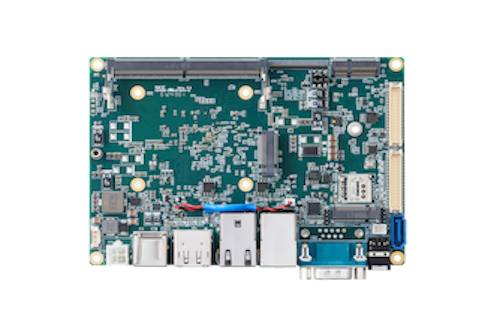
AAEON has announced the de next-RAP8. Information is available on the official product page and press release, with purchase options through the official eShop.
This embedded x86 SBC packs 13th Gen Intel Core (UE, up to 15W) with LPDDR5x 16GB, dual LAN (2.5GbE and GbE), SATA, and M.2 (NVMe) into an ultra-compact 86×55mm board.
It’s ideal for applications like robotics and drones that require “carefully designed I/O and cabling for embedded deployment.” However, there are points to verify before adoption, such as HDMI version discrepancies and boot device support.
Specifications
| ■ AAEON de next-RAP8 | |
|---|
| CPU | 13th Gen Intel Core i7-1365UE / i5-1335UE / i3-1315UE (up to 15W) |
| GPU | Intel Iris Xe (integrated) |
| NPU | On-board NPU not confirmed in primary sources |
| Memory | LPDDR5x 16GB (on-board, SKU configured with 16GB) |
| Storage | SATA 6Gb/s, +5V SATA power connector, M.2 2280 M-Key (PCIe x2) |
| Wired LAN | 2.5GbE (Intel I226-LM) 1 port + 1GbE (Intel I219-LM) 1 port |
| USB | USB 3.2 Gen2 Type-A 2 ports (rear), USB 2.0 4 ports (header) |
| Video Output | HDMI (external), eDP (internal) |
| Expansion | PCIe Gen3 x4 (via FPC), 40-pin header (GPIO, USB2.0, RS-232/422/485) |
| Power | 12V DC jack, AT/ATX (default: AT) |
| Cooling | 4-pin smart fan (cooler version only), CPU cooler/heat spreader (optional) |
| Operating Temp | 0–60°C |
| Supported OS | Windows 10 (64-bit), Ubuntu 22.04.3 (Kernel 6.2) |
| Dimensions | 86×55mm |
| Included Items | Main board, M2.5 copper standoffs ×4 |
This embedded x86 SBC packs 13th Gen Intel Core (up to 15W), dual LAN with 2.5GbE and GbE, SATA and M.2 (NVMe) into an 86×55mm ultra-compact board.
However, discrepancies in HDMI version specifications between documents and boot device support range are points to verify before purchase.
Features
CPU and Integrated GPU (Iris Xe)
The CPU options include the 13th Gen Intel Core UE lineup (i7-1365UE / i5-1335UE / i3-1315UE), designed for a maximum 15W envelope. The press release mentions up to 10 cores and 12 threads, which is quite aggressive for a board this size.
The integrated GPU is Intel Iris Xe. What’s notable here is that while there’s no mention of a dedicated NPU, the combination of GPU general-purpose computing and media processing makes it “easy to bring x86 assets.” In embedded environments, whether your development environment, drivers, and existing applications work as-is can quietly make a big difference.
AI Acceleration (Plan for External Solutions)
On-board NPU presence couldn’t be confirmed in the official specification pages. If AI processing is your primary goal, it’s realistic to estimate what you can achieve with the CPU and integrated GPU, then consider external accelerators if needed.
Competing options include the Jetson series (running inference on GPU/DLA), NPU-equipped Arm SBCs, or Raspberry Pi 5 with external AI accelerators. However, the de next-RAP8 prioritizes board size and I/O density while offering PCIe expansion to adapt to your use case later. The more you’ve decided “what to add” upfront, the easier your decision becomes.
On that note, the de next-RAP8 provides PCIe Gen3 x4 via FPC, and AAEON themselves anticipate expansion with adapter cards for AI acceleration, wireless, additional storage, capture, and more. It’s not the type that includes an inference accelerator from the start, but “having an expansion path on a compact x86” is a welcome feature.
Storage and Boot (Points to Address Early)
Storage includes SATA 6Gb/s plus M.2 2280 M-Key (PCIe x2). For continuous logging or long-term operation, being able to separate SATA and NVMe by purpose is a strength.
On the other hand, while UEFI BIOS is mentioned, it’s difficult to determine from primary sources alone what range of boot devices (NVMe, USB) are officially supported. For production or field deployment, it’s safest to verify boot order and supported devices in the manual.
Expansion and Headers (Eliminate Compatibility Issues Early)
There are two key expansion points. First, the M.2 2280 M-Key uses PCIe x2, so you’ll want to balance bandwidth and power consumption when choosing NVMe drives. Second, PCIe Gen3 x4 via FPC requires conversion boards and cable routing.
Additionally, the 40-pin header provides 8-bit GPIO, USB 2.0, and RS-232/422/485 signals. While convenient, verifying pinout, signal voltage, and ESD protection assumptions in the manual is essential.
Network and I/O (Use Cases for Dual LAN)
Having dual LAN with 2.5GbE and GbE is quite rare at this size. For example, you could use the 2.5GbE side for upstream network or storage connectivity, and the GbE side for control or sensor networks, making it easier to design network separation in the field.
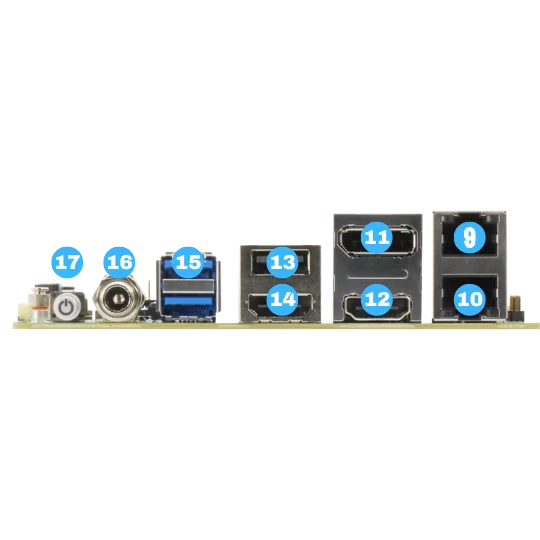
Rear I/O consists of a minimal configuration: 2 USB Type-A ports, HDMI, and a 12V DC jack. When installed in a compact enclosure, cabling tends to concentrate, so designing for connector retention and cable bend radius early helps prevent issues.
Power and Thermal Design (Avoiding Problems)
Power input is 12V, with AT/ATX power modes (default: AT). For embedded applications, this directly affects startup and shutdown operation design, so decide early whether to use power button operation, automatic startup, or remote power control.
The operating temperature range is 0–60°C, with a 4-pin smart fan mentioned only for the cooler version. With a 15W-class CPU on an 86×55mm board, heat dissipation and airflow in an enclosure will affect both performance and stability. This should be considered as part of enclosure design.
Appearance
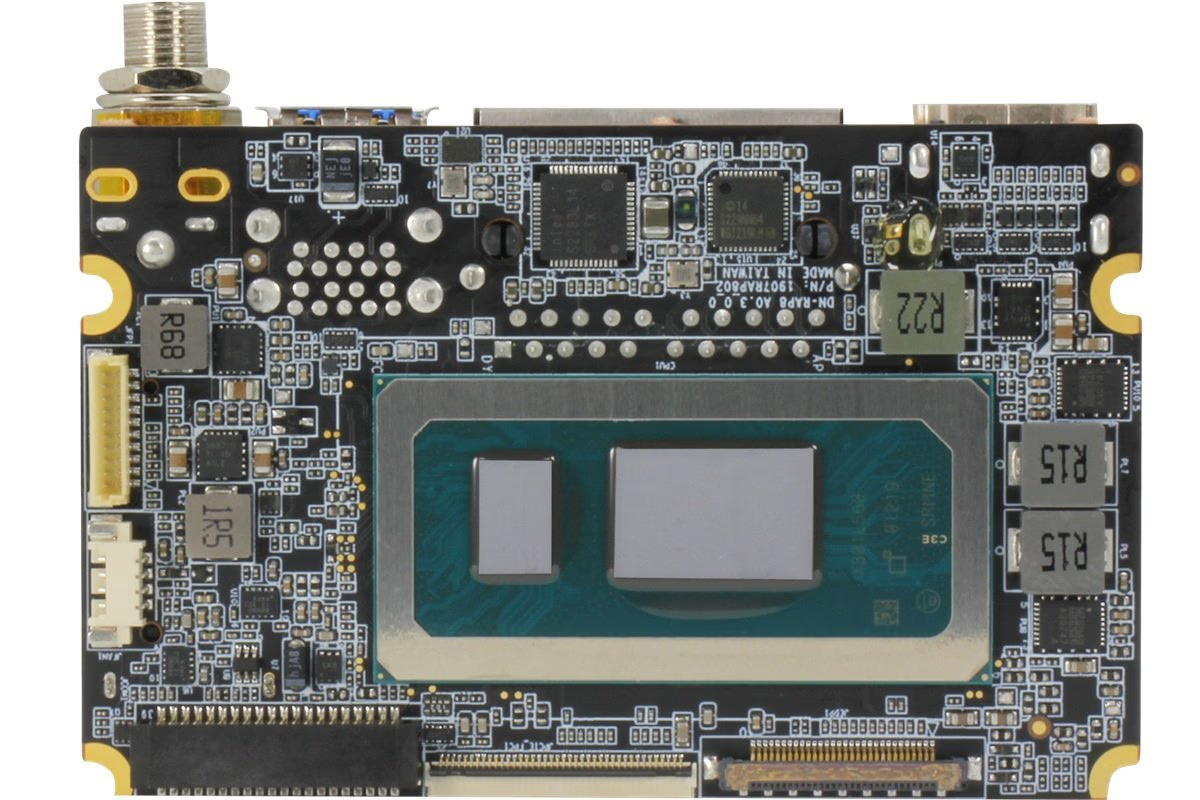
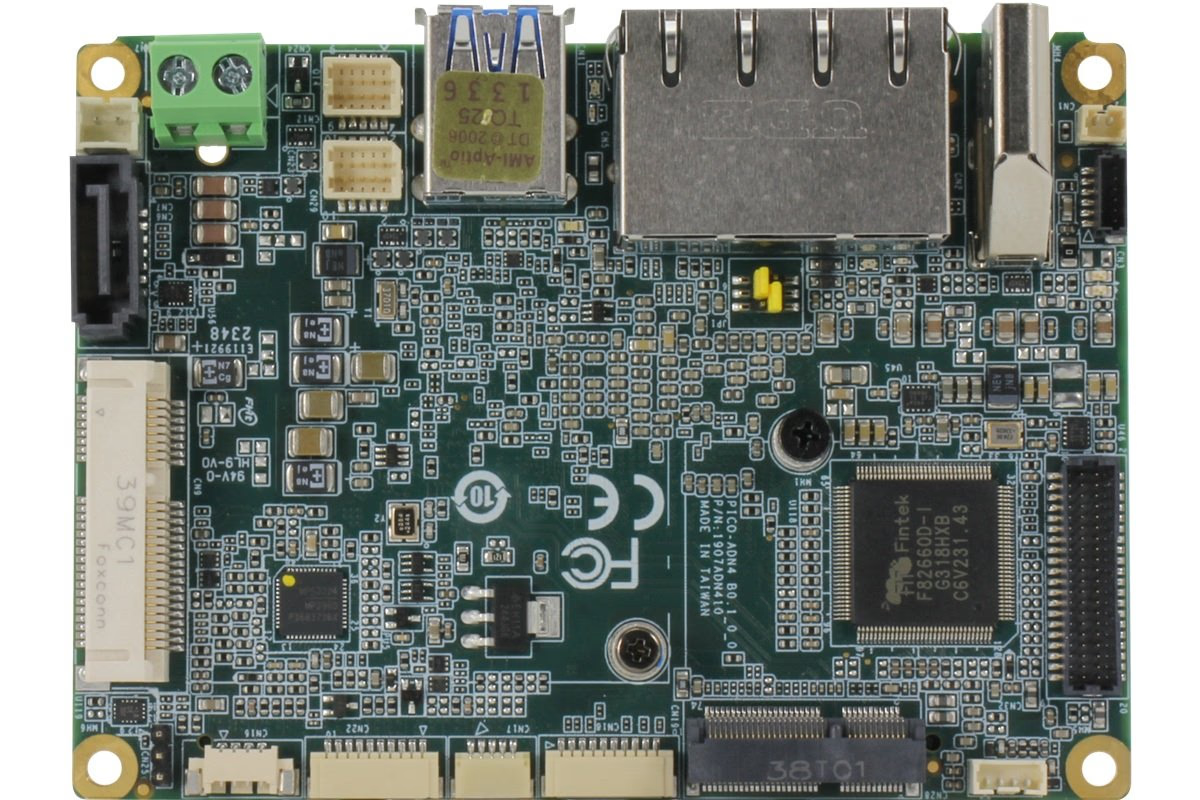
The top side of the board shows the CPU package near the center, with high component density evident for the 86×55mm size. Storage and headers appear to be consolidated on this side, so cable interference (especially M.2 and cable height) should be considered during enclosure design.
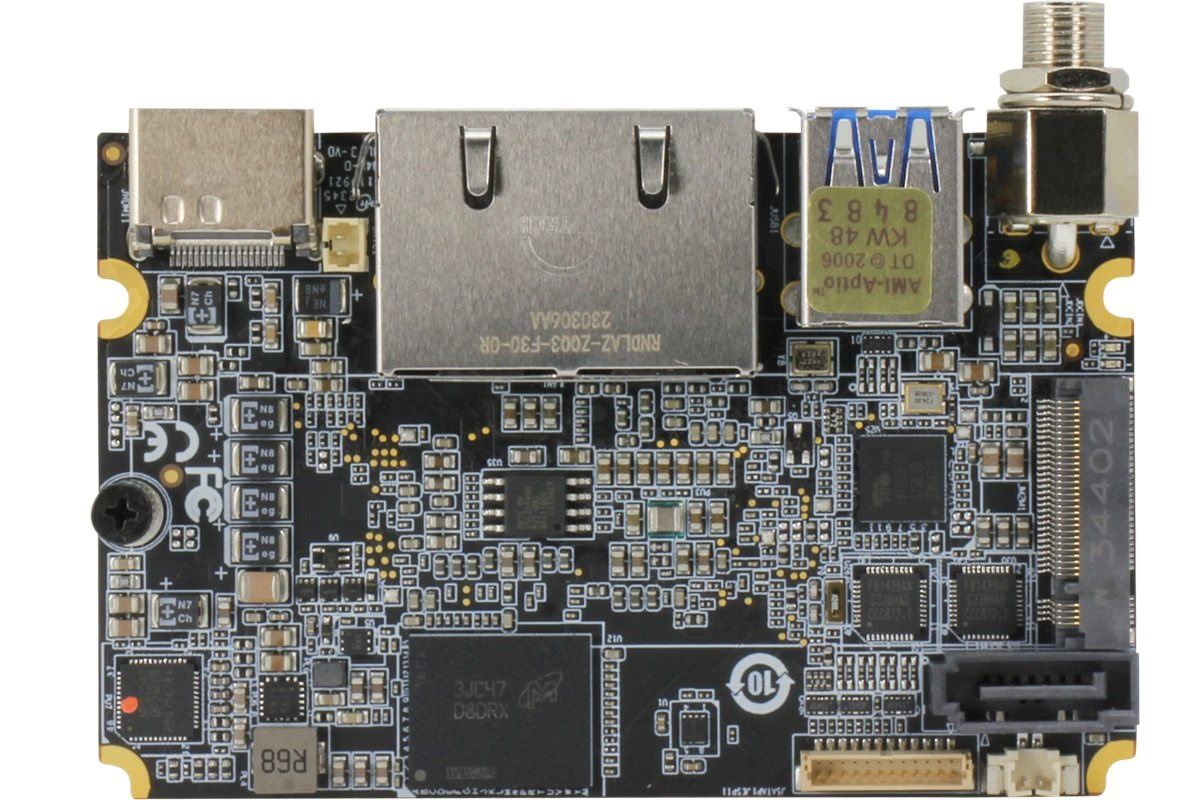
The bottom side shows components concentrated toward the rear I/O side. Heat dissipation and insulation considerations (whether to use backing plates in the enclosure or avoid interference) should be verified with the actual unit and drawings before adoption.
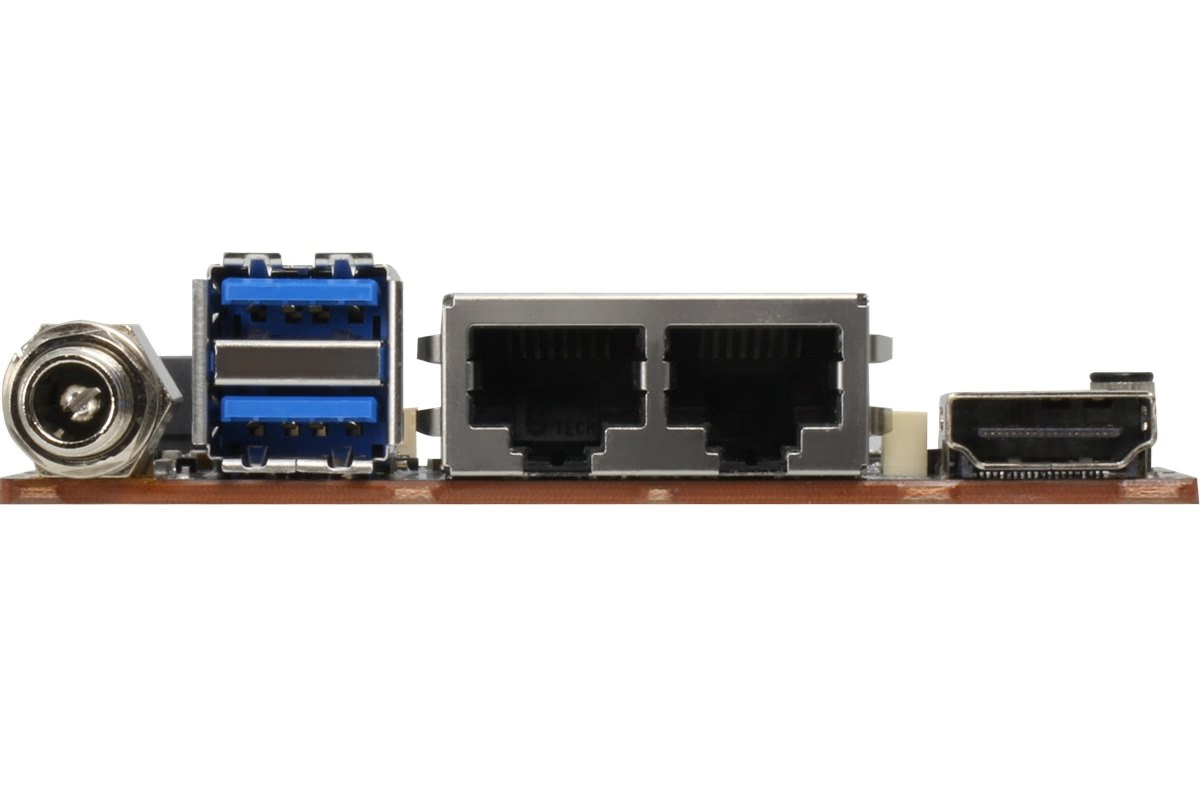
The port side arranges dual LAN (2.5GbE and GbE), 2 USB Type-A ports, HDMI, and 12V DC jack in a line. When installed in an enclosure, this side becomes the cable concentration point. For environments with vibration (robotics, automotive, etc.), cable retention and mounting methods should be planned from the start.
Summary
The de next-RAP8 is a well-focused compact x86 SBC that packs 13th Gen Intel Core (up to 15W), dual LAN, SATA and NVMe, plus PCIe expansion into an 86×55mm form factor. Having dual LAN on an x86 board this small is truly attractive.
It’s ideal for those who want to use Ubuntu or Windows x86 assets while carefully designing network separation and wired peripheral cabling for embedded deployment. It’s a great fit for robotics, drones, and industrial equipment where you want “compact size without compromising on I/O.”
On the other hand, it may not suit those who want to complete AI inference on the board alone from the start (NPU not confirmed in primary sources). Also, HDMI version discrepancies, boot support range, and GPIO header details require verification for production scenarios. It’s safest to cross-reference the manual and primary sources before adoption.
| Retailer | Price (Reference) |
|---|
| AAEON eShop | See product page (varies by configuration) |