200 TOPS Class "Rugged AI Box" Fogwise AIRbox Q900: Enabling On-Site Inference without Cloud
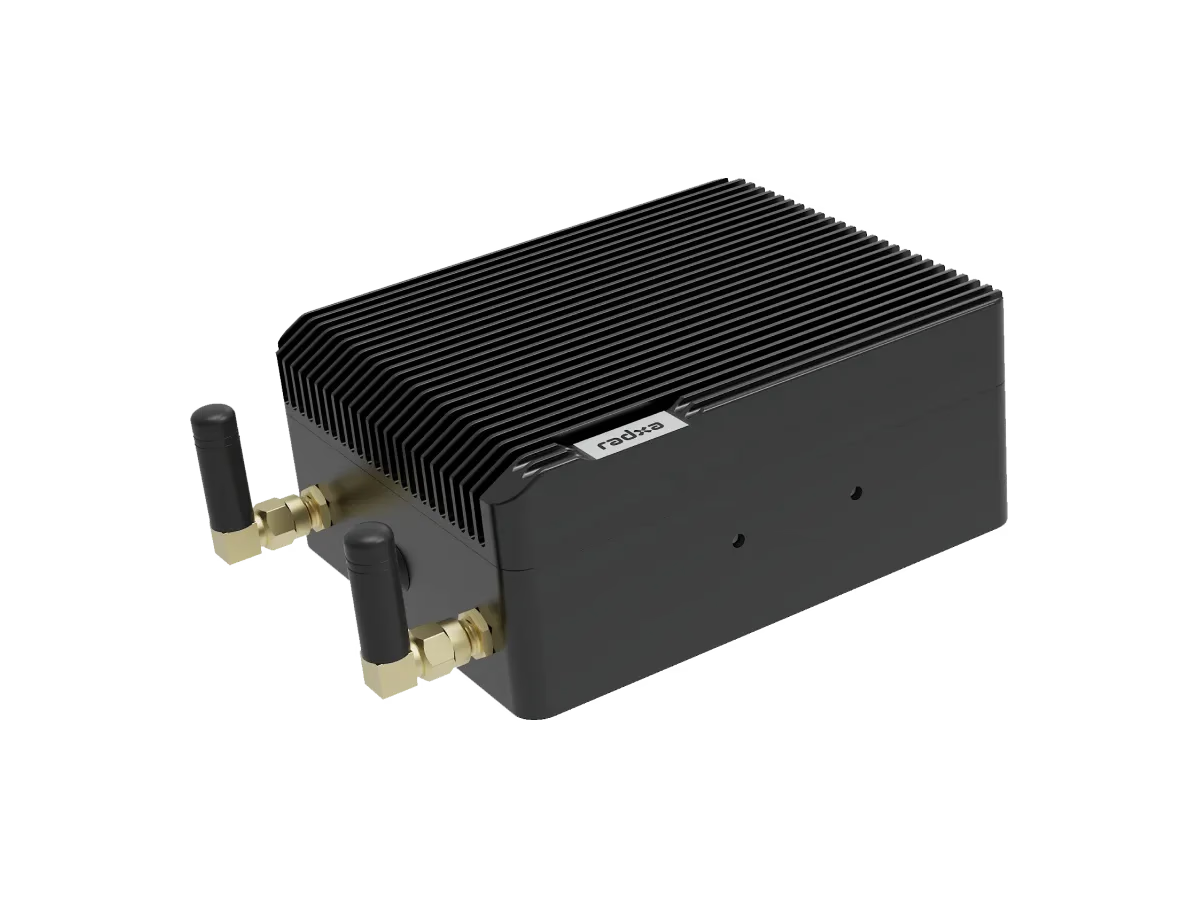
Radxa (Fogwise®) announced the official release of "Fogwise AIRbox Q900" on Sep 30, 2025. Powered by Qualcomm Dragonwing IQ-9075 with max 200 TOPS (INT8 sparse) NPU, 36GB ECC memory, and dual 2.5GbE, it targets on-site inference needs.
Radxa (Fogwise®) announced the official release of the Fogwise AIRbox Q900 on September 30, 2025. Product info is available on the official page and docs.
Powered by Qualcomm Dragonwing™ IQ-9075, this edge AI box boasts a max NPU performance of 200 TOPS (INT8 sparse).
It hits the spot for requirements like “Running AI inference on-site without cloud” and “Rugged box with dual 2.5GbE and SIM support”. However, be aware that optimization for Qualcomm toolchains (QAIRT, etc.) is a prerequisite.
M.2 M Key 2230 (PCIe Gen4 x4), Mini PCIe (Wi-Fi/4G/5G), Nano SIM, UFS/eMMC module
Network
Wired: 2x 2.5GbE (TSN), Wireless: Wi-Fi 6/BT 5.4 via Mini PCIe, or 4G/5G + Nano SIM
Video
HDMI 2.0 (Max 4K@60) x1
USB
USB 3.1 Gen2 Type-A HOST x1, OTG x1, Type-C (Console/Debug)
Size
104x84x45mm
Power
DC 12V Input (Recommended 12V/5.4A)
OS
Ubuntu, Yocto support. RadxaOS (Debian/Ubuntu based) docs available
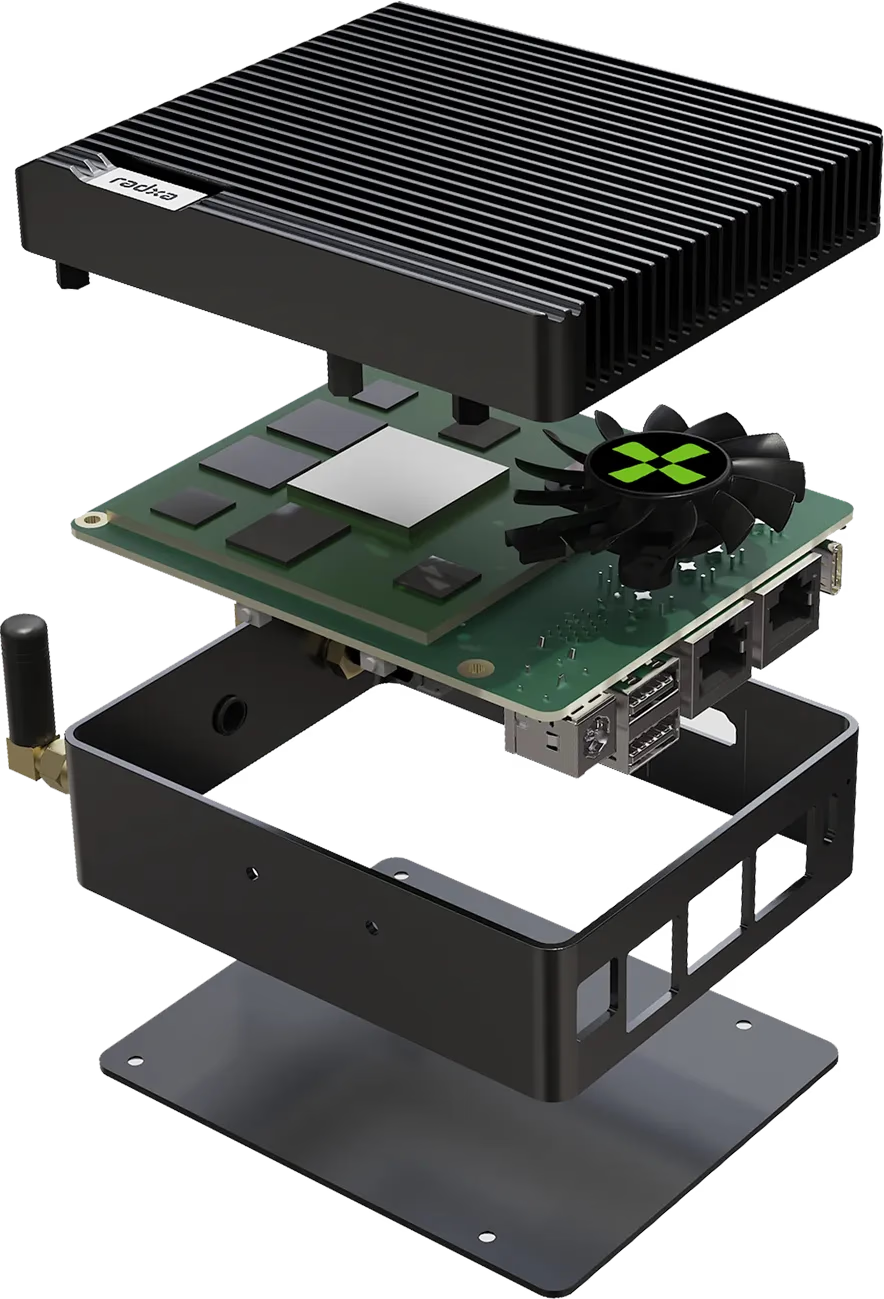
Dual Hexagon NPU with max 200 TOPS (INT8 sparse) + 36GB ECC memory packed into a 104x84x45mm metal chassis with dual 2.5GbE and SIM support.
Weight is unconfirmed. Quick Start guide notes “Prepare 12V DC power, HDMI cable, Ethernet, etc.”
Features
Processor and NPU
The IQ-9075 positioning is interesting. While an extension of mobile SoCs, here it’s strictly a “field box” utilizing CPU, GPU, and NPU together. The max 200 TOPS (INT8 sparse) Dual Hexagon NPU is aimed at completing inference on the device.
Note that this is a different world from NVIDIA Jetson’s “CUDA simplicity”. Optimization for Qualcomm toolchains (QAIRT, etc.) is expected, so assess difficulty based on your existing assets.
Memory & Storage
36GB LPDDR5 + ECC. This is a highlight. For 24/7 edge use and fluctuating temps, ECC adds significant value.
Standard storage is onboard 128GB UFS 3.1, with an M.2 2230 NVMe (PCIe Gen4 x4) slot for expansion. Official guides cover user installation (Power off -> Insert -> Screw), which is reassuring.
Ideally, keep the OS on UFS and use NVMe for “logs, datasets, models”. Great for surveillance metadata, factory line logs, or local LLM caches.
GenAI Performance
Official pages explicitly mention running local GPT, LLaMA, and Stable Diffusion. Example: LLaMA-7B around 0.6s first token, then ~12 tok/s.
Don’t judge solely by “200 TOPS”. Performance varies with model quantization, memory, and thermals. Uses include “Lightweight LLM field response”, “Image classification/detection”, and “Simple generation (verification/demo)”.
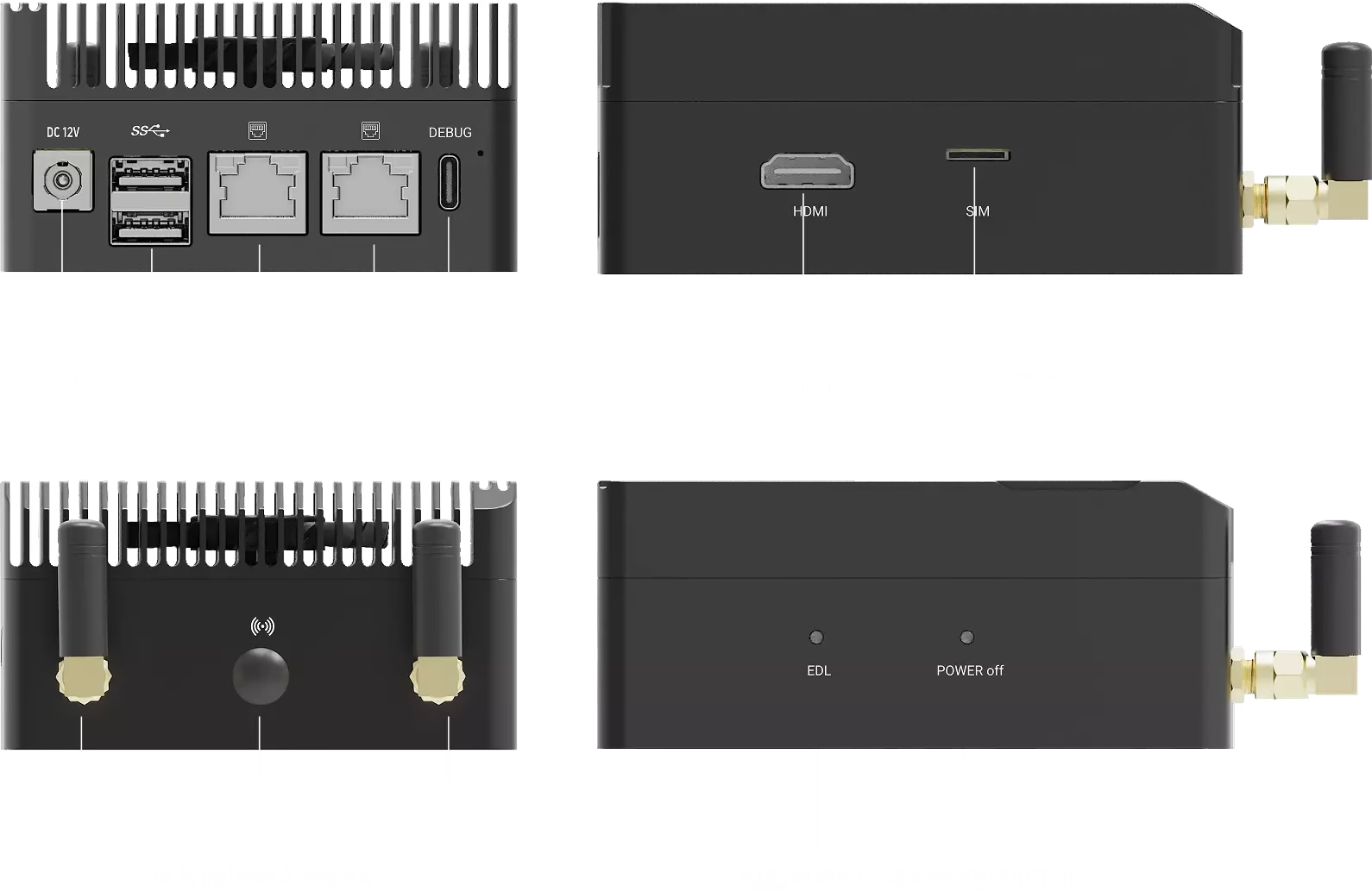
Ports are practical: DC12V, USB, 2x 2.5GbE, Type-C (Console/Debug), HDMI 2.0, SIM slot, EDL button. “Debug-ready Type-C” and “EDL access” are crucial for mass deployment.
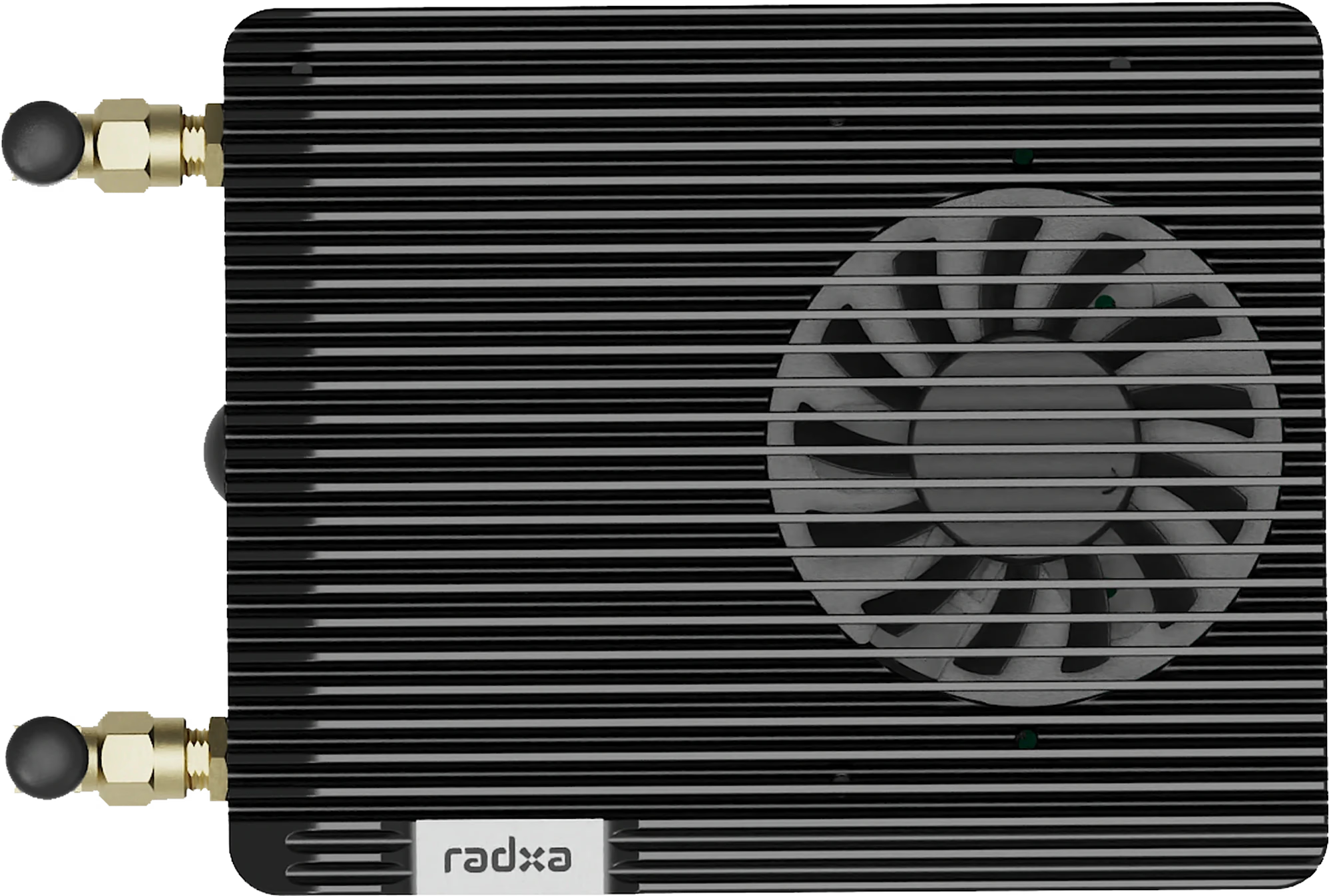
Top view shows fan placement and fins. Not relying entirely on software for cooling is good practice for AI boxes susceptible to thermal throttling.
Others
Network: 2.5GbE x2 (TSN) is highly practical, offering bandwidth and network segmentation (e.g., Upstream vs. Device).
Wireless via Mini PCIe allows choice of Wi-Fi 6/BT 5.4 or 4G/5G modules. Nano SIM slot confirmed.
Power/Cooling: DC 12V (Rec 12V/5.4A). Typical power approx. 20W (Official blog). Metal chassis + PWM fan is a solid cooling approach for 24/7 use.
Summary
Fogwise AIRbox Q900 is exactly what it looks like: a “Box to run AI on-site”. 200 TOPS NPU, 36GB ECC, UFS+NVMe, dual 2.5GbE, SIM support – all the common edge requirements.
Suited for: On-site inference users, those needing rugged dual 2.5GbE/SIM boxes.
Not suited for: Direct CUDA asset porting, “one-click” generation speedsters. Requires Qualcomm ecosystem alignment.
Personally, I appreciate the “Proper I/O and operational design” over raw specs.
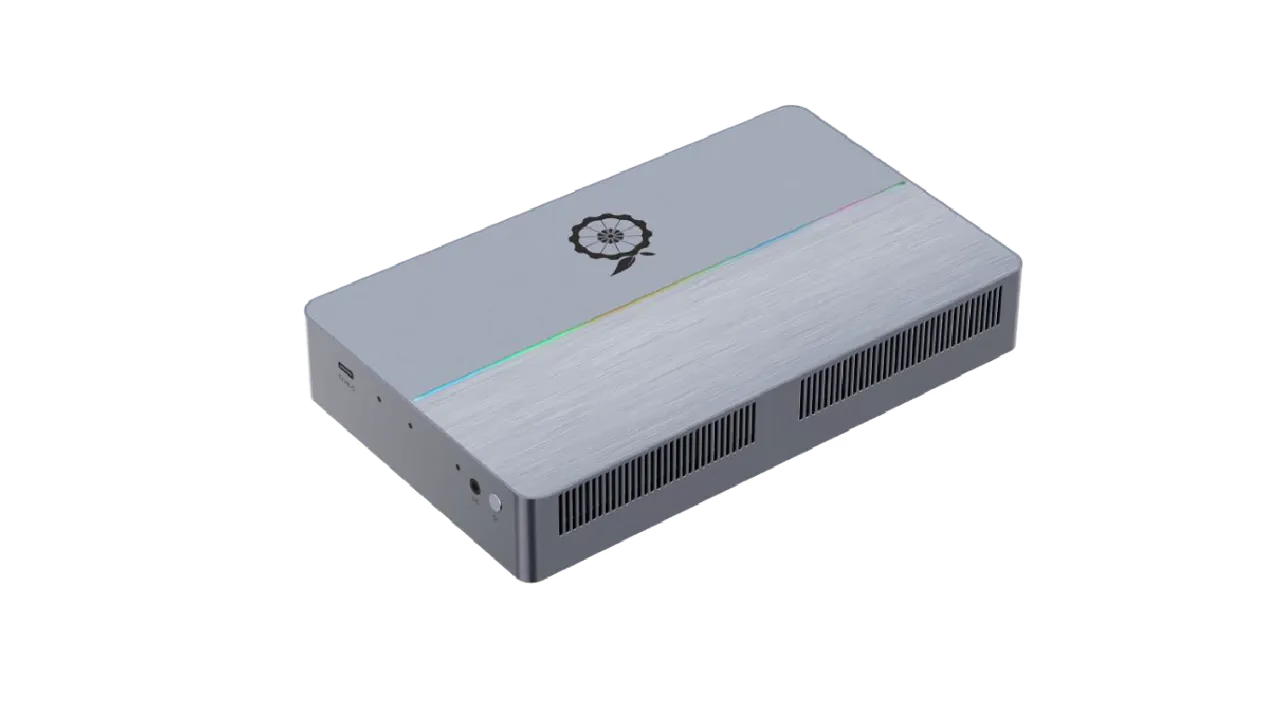
Orange Pi has announced the "OrangePi AI Studio Pro" featuring dual Ascend 310 chips. With 352 TOPS of AI computing power and up to 192GB LPDDR4X, it connects to the host via USB4 (Type-C) as an "AI box." This is more of an external AI accelerator than a traditional SBC.
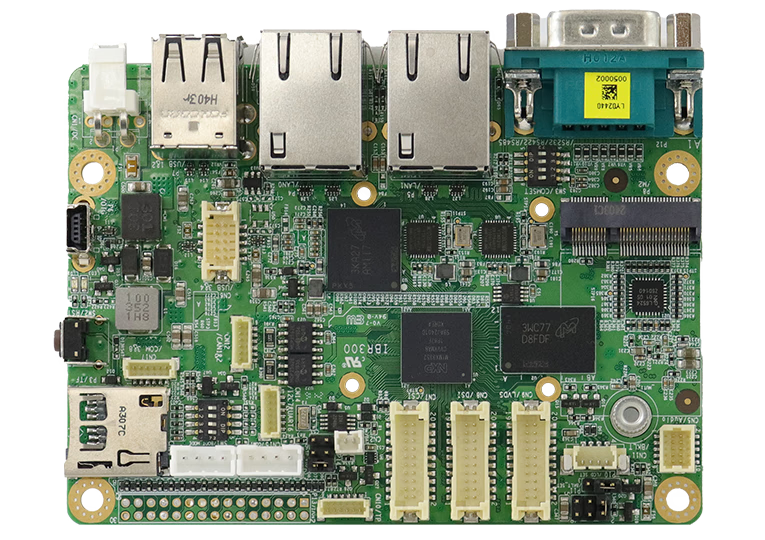
IBASE offers the IBR300, a 2.5-inch SBC powered by the NXP i.MX 93. It features dual GbE, locking 12-24V input, and fanless design rated for -40 to +85°C, all tailored for embedded device integration. However, some details like M.2 wiring specifications and boot procedures are not fully disclosed, so it is advisable to obtain datasheets or contact the manufacturer before adoption.
ADLINK offers the 3.5-inch SBC "SBC35-ALN" as part of their SBC35 series lineup. Built around the Intel Processor N97 (12W), it features DDR5 SO-DIMM, NVMe (M.2 M-Key), and dual 1GbE (Intel i210IT) - a solid foundation for industrial edge applications. However, there are points to clarify before deployment, including memory limit discrepancies and expansion slot prerequisites.
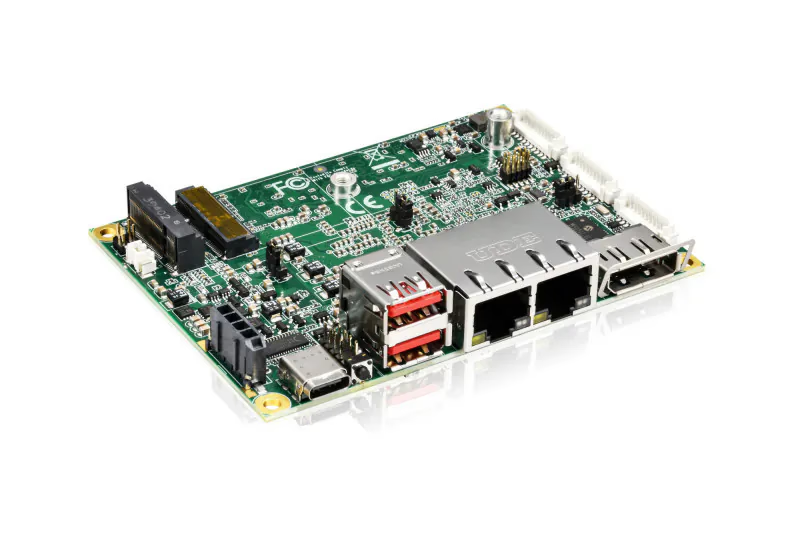
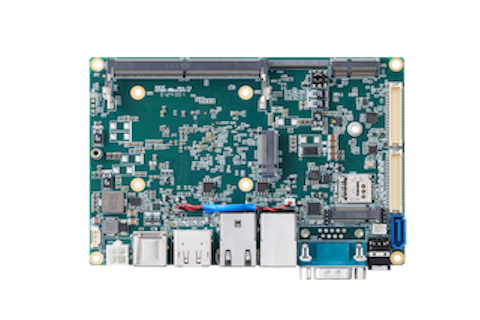
Kontron is deploying the "2.5"-SBC-AML/ADN", a Pico-ITX (100x72mm) SBC. Supporting Intel Atom x7000(R)E, Core i3-N305, and N97, it offers dual 2.5GbE, 3-screen 4K output, and M.2 expandability for edge gateways.