Radxa Dragon Q6A: An Industrial SBC Powered by Qualcomm QCS6490
Radxa has published the "Radxa Dragon Q6A" on their official page and Product Brief (Rev 1.4, updated October 24, 2025). This industrial SBC packs Qualcomm QCS6490, Wi-Fi 6, Bluetooth 5.4, 3 MIPI CSI ports, and M.2 2230 NVMe into an 85×56mm form factor. However, AI performance and cooling requirements depend on OS/SDK and implementation conditions, so checking the official Docs before deployment is recommended.
Radxa has published the Radxa Dragon Q6A on their official page and Product Brief (Rev 1.4, updated October 24, 2025).
This industrial SBC packs Qualcomm QCS6490, Wi-Fi 6, Bluetooth 5.4, 3 MIPI CSI ports, and M.2 2230 NVMe into an 85×56mm form factor.
However, AI performance and cooling requirements depend on OS/SDK and implementation conditions, so checking the official Docs before deployment is recommended.
USB 3.1: Type-A ×1 (HOST/OTG), USB 2.0: Type-A ×3 (HOST)
Expansion
M.2 M Key (PCIe Gen3×2, for NVMe), 40-pin GPIO, fan header (2-pin 1.25mm), power button, EDL button
Size
85×56mm
Power
12V input (USB-C or external 12V). Recommended: minimum 18W, 24W+ for full load
Supported OS
Official system images available. Product Brief mentions multiple OS options (details to be confirmed)
Accessories
Not confirmed in official primary sources
QCS6490 + Wi-Fi 6 + Bluetooth 5.4 + 3 MIPI CSI + M.2 NVMe packed into an 85×56mm board—the same size as Raspberry Pi—designed for industrial applications.
The 12V input requirement and unconfirmed details about cooling, weight, and included accessories are points to verify before purchase.
Features
SoC and CPU
The Dragon Q6A is powered by Qualcomm QCS6490. With an 8-core configuration of Kryo Prime (1), Gold (3), and Silver (4), this SoC enables a “division of labor” design typical of edge devices—handling control processing, networking, and I/O while offloading AI and video processing to dedicated blocks (Hexagon).
AI Performance (Hexagon)
For AI, the board combines Hexagon DSP (HVX) and Hexagon Tensor Accelerator, with the official Docs stating up to 12 TOPS.
However, TOPS figures vary depending on operation precision, models, and software stack, so it’s safer to start from “whether it works for your use case.” This subtly makes a difference.
For comparison, you could consider adding an external AI accelerator (like Hailo-8L) to Raspberry Pi 5, or opting for NVIDIA Jetson development kits. However, this board’s differentiator is having “camera input, display, wireless, and storage expansion all integrated on the board,” which is attractive for reducing wiring and component count when prototyping.
Memory and Storage
Memory is LPDDR5 (5500MT/s) with options from 4 to 16GB. Since this isn’t an expandable type, you’ll need to choose your configuration at purchase—it’s wise to select with headroom based on your use case (resident services, log volume, image buffers).
For storage, you can choose from microSD, eMMC/UFS modules, and M.2 2230 NVMe. Starting evaluation with microSD, then switching to eMMC/UFS for production or reliability, or NVMe for read/write performance and logging—this flexibility to upgrade incrementally is a nice benefit.
The M.2 slot is M Key and explicitly stated as “2230 NVMe,” so assuming SATA-based M.2 could be a pitfall. Planning for NVMe from the start is the safe approach.
Camera and Video I/O
MIPI CSI provides 3 ports total (4-lane×1, 2-lane×2), plus MIPI DSI (4-lane) and HDMI (up to 4Kp30). If you’re building a device that handles camera input and display simultaneously, having “all these I/O options available” is quite helpful.
However, sensor compatibility, FPC form factors, and driver support aren’t determined by SoC capability alone. If you have specific cameras or panels in mind, checking compatibility lists and setup procedures first is recommended.
Network and Expansion
Wireless includes Wi-Fi 6 and Bluetooth 5.4 with 2 external antenna connectors. Wired is 1GbE, with PoE requiring a PoE HAT. For field deployment, deciding on power method (12V or PoE) early makes design smoother.
GPIO uses a 40-pin header with references to UART, I2C, SPI, PWM, etc. Voltage is 3.3V (tolerant to 3.63V), with a note about not connecting USB-UART’s VCC line during UART debugging. This is a subtle but common source of accidents worth noting upfront.
OS and Setup (Watch Out for SPI Boot FW)
The official Docs provide Radxa OS system images, with separate images for microSD/USB/eMMC/NVMe and UFS.
Additionally, T4 and latest system images require the latest SPI boot firmware. The official Docs explicitly state “FW flashing is required if purchased before October 2025,” so factor this into initial setup planning depending on purchase timing.
Note that FW updates change boot behavior, such as adding the default boot device order (USB > SD > NVMe > eMMC > UFS).
Boot firmware comes pre-flashed by default and normally doesn’t need re-flashing, but having official recovery procedures available is reassuring.
Power and Thermal (Avoiding Issues)
Power input assumes 12V, fed via USB-C (12V input) or external 12V. For light loads, minimum 18W (12V/1.5A) is stated; for full load, 24W (12V/2A)+ is recommended—choosing with headroom is wise.
Fan header (2-pin 1.25mm) information is provided, but recommended heatsink/fan configurations and temperature conditions aren’t confirmed from primary sources alone. When building into an enclosure, consider clearance and heat dissipation paths alongside dimension drawings—if your use case is defined, getting hands-on measurements early is recommended.
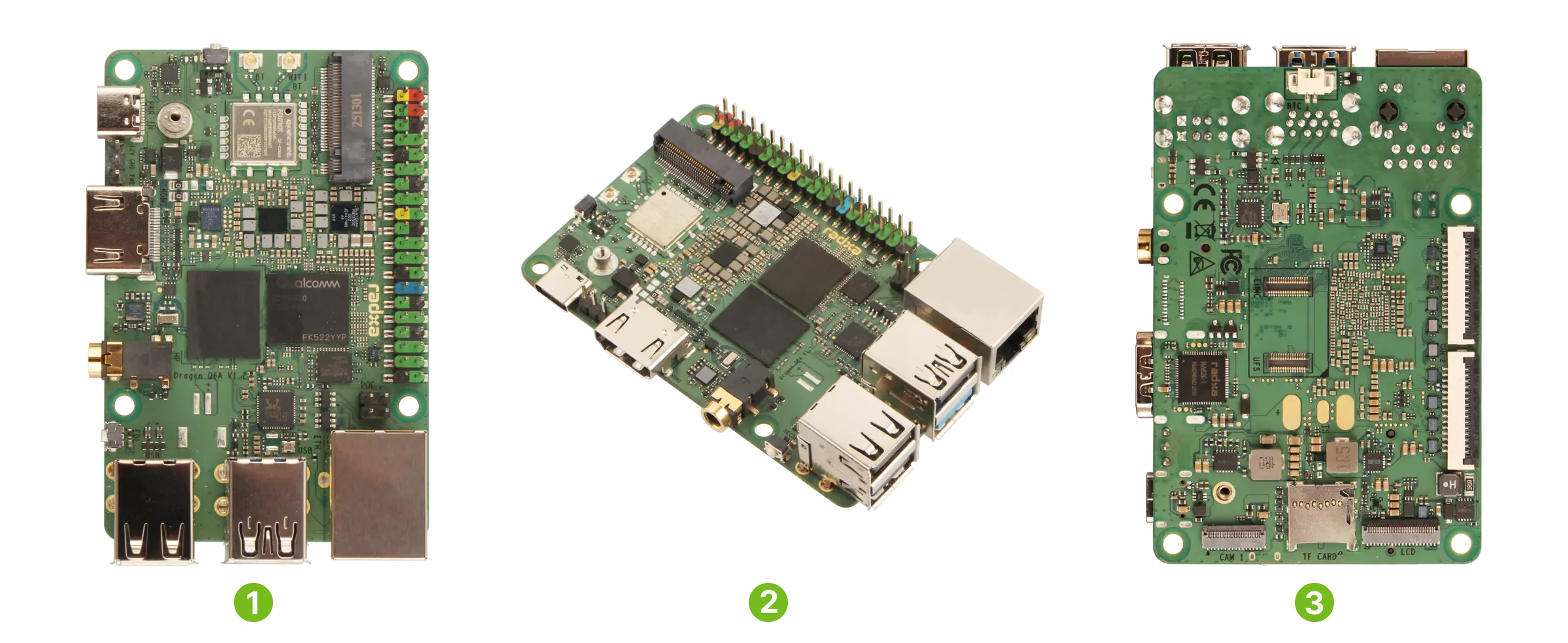
Front, Side, and Back views are combined in one image, providing a quick look at connector placement and the board’s underside. Useful for getting a sense of terminal layout and mounting without making detailed assumptions.
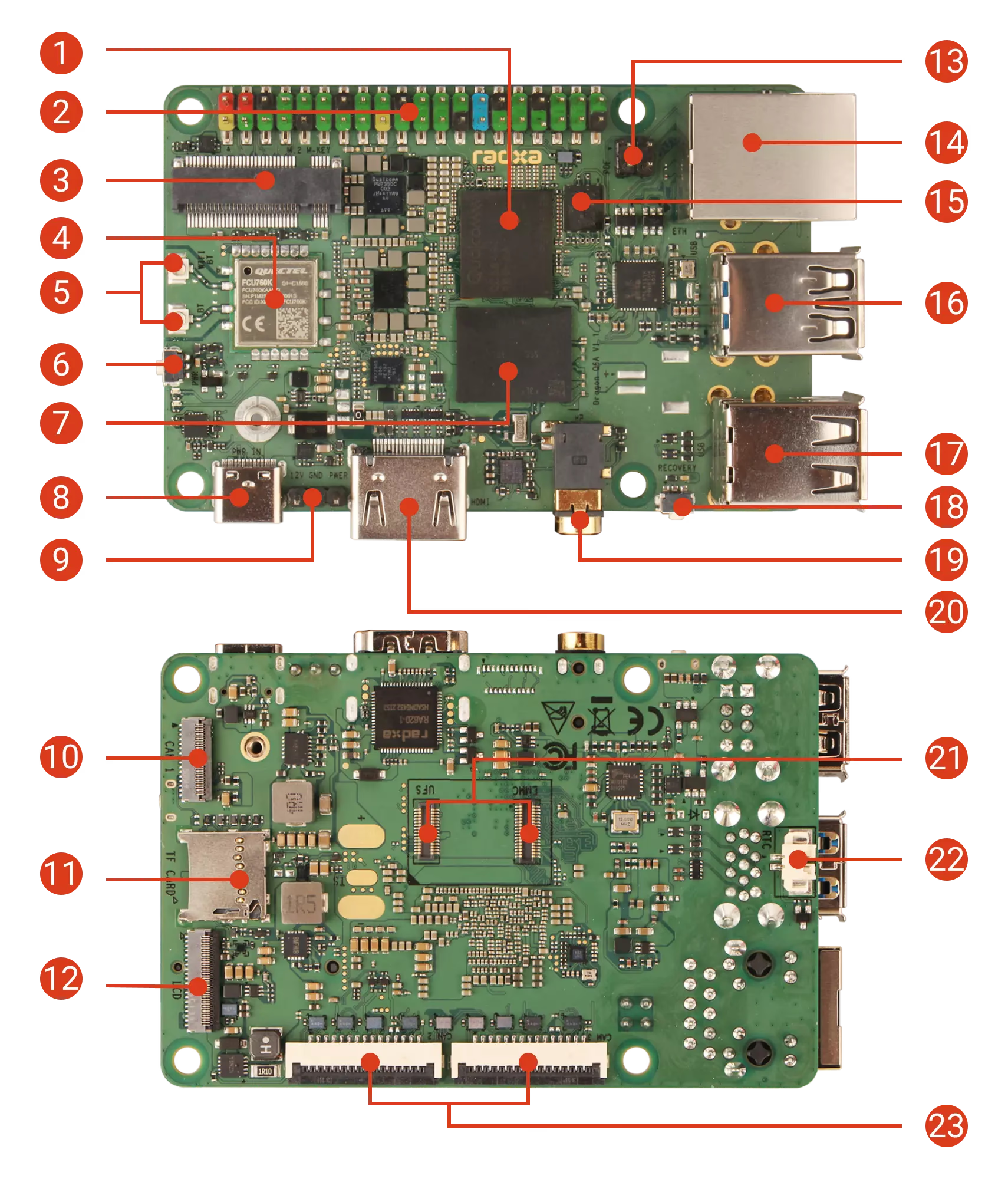
The interface diagram shows positions of M.2, CSI/DSI, USB, LAN, power input, etc. with numbered labels. For case design or wiring planning, reviewing this alongside the dimension PDF is recommended.
Summary
Radxa Dragon Q6A is an industrial SBC that packs Qualcomm QCS6490, Wi-Fi 6, Bluetooth 5.4, 1GbE, 3 MIPI CSI ports, DSI, HDMI, and M.2 2230 NVMe into an 85×56mm form factor. For those looking to build “edge devices” that handle camera input and display simultaneously, this is a well-designed board.
It’s suited for those who can design with 12V power in mind including enclosure and peripheral circuits, and who can proceed with validation following official Docs—including “OS images and SPI boot firmware.” It’s less suited for those who want cooling, accessories, and detailed compatibility information confirmed before making a purchase decision, as some items remain unverified.
Purchasing appears to be through Approved Partners rather than direct sales, so confirming regional distributors and inventory first is the practical approach.
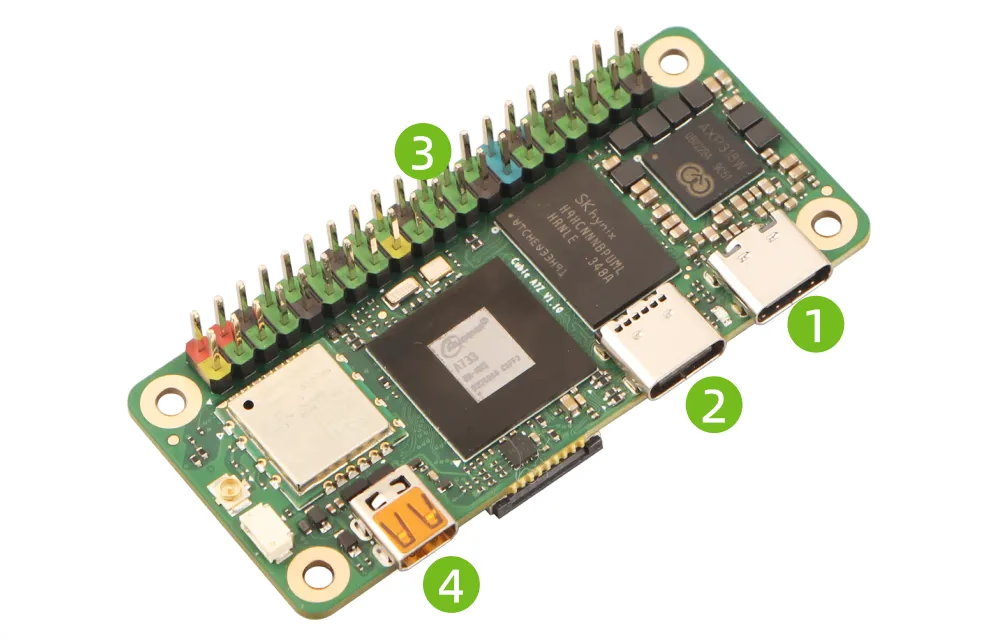
Radxa has published the product page and official documentation for the "Radxa Cubie A7Z." This ultra-compact SBC packs an Allwinner A733 (Cortex-A76×2 + Cortex-A55×6) and a 3 TOPS-class NPU into a 65×30mm form factor, complete with Wi-Fi 6 and Micro HDMI. However, wired LAN and M.2 require expansion, and PCIe is limited to Gen3 x1 via FPC, so checking whether it fits your use case beforehand is recommended.
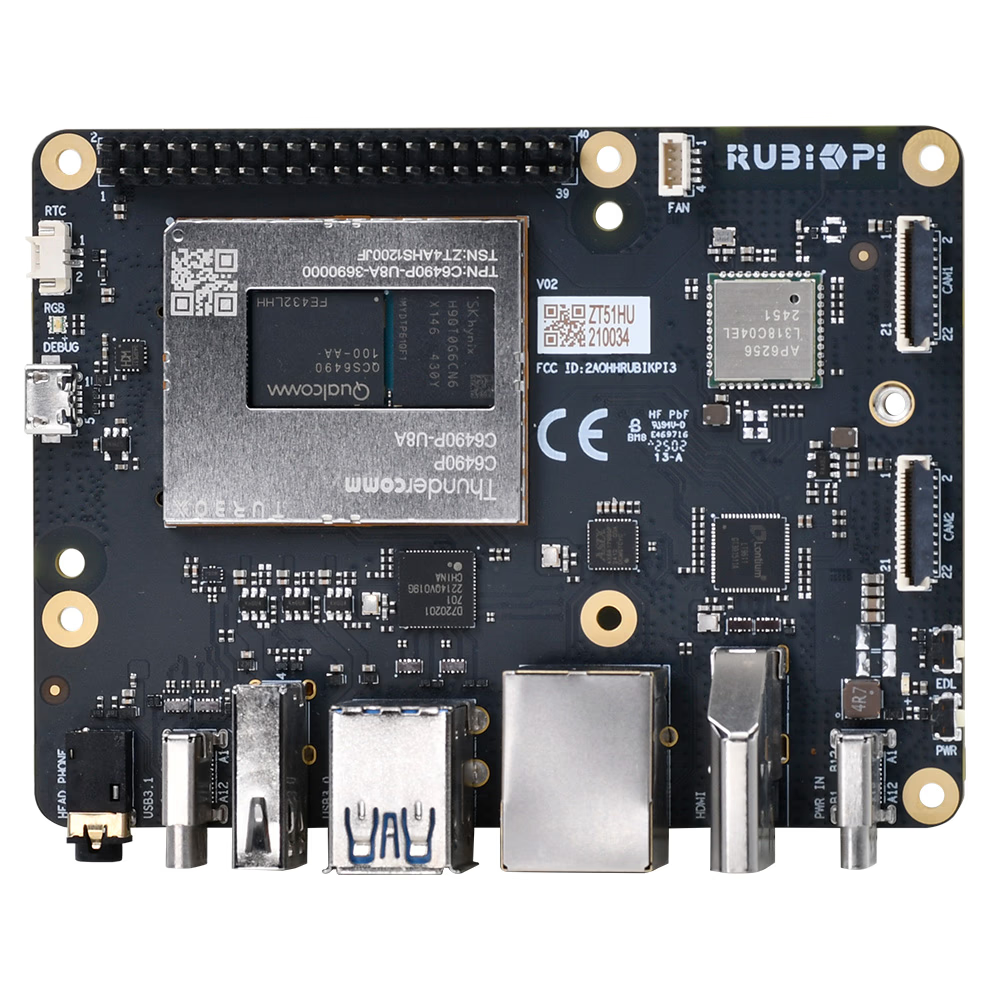
Thundercomm unveiled the RUBIK Pi 3 at CES 2025 on January 7, 2025. Featuring the QCS6490 (Dragonwing series) with up to 12.5 TOPS NPU and onboard 128GB UFS 2.2, this board stands out. However, with USB-C PD (recommended 12V 3A) power requirements and UFS-specific flashing procedures, understanding these before purchase is essential.
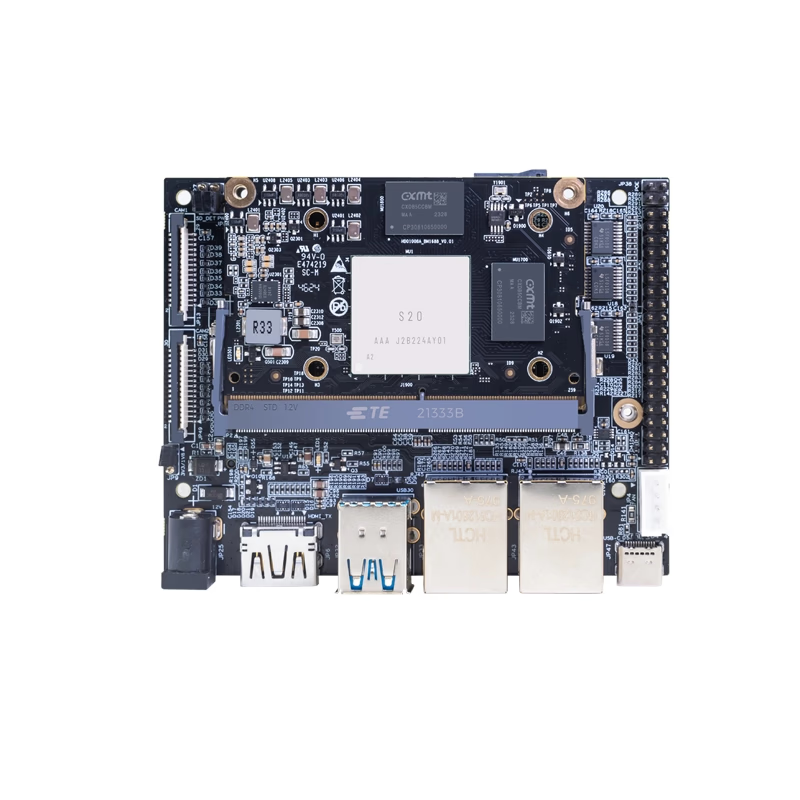
Banana Pi has released product information for their AI-focused core module "Banana Pi BPI-SM9". Equipped with SOPHGO BM1688 and rated at up to 16 TOPS (INT8), the official documentation emphasizes video analytics applications such as decoding and analyzing multiple HD video streams. However, there are inconsistencies in official sources regarding power (5V/12V), dimensions, and GbE port count, so verify whether you are purchasing the module alone, IO board, or kit before ordering.
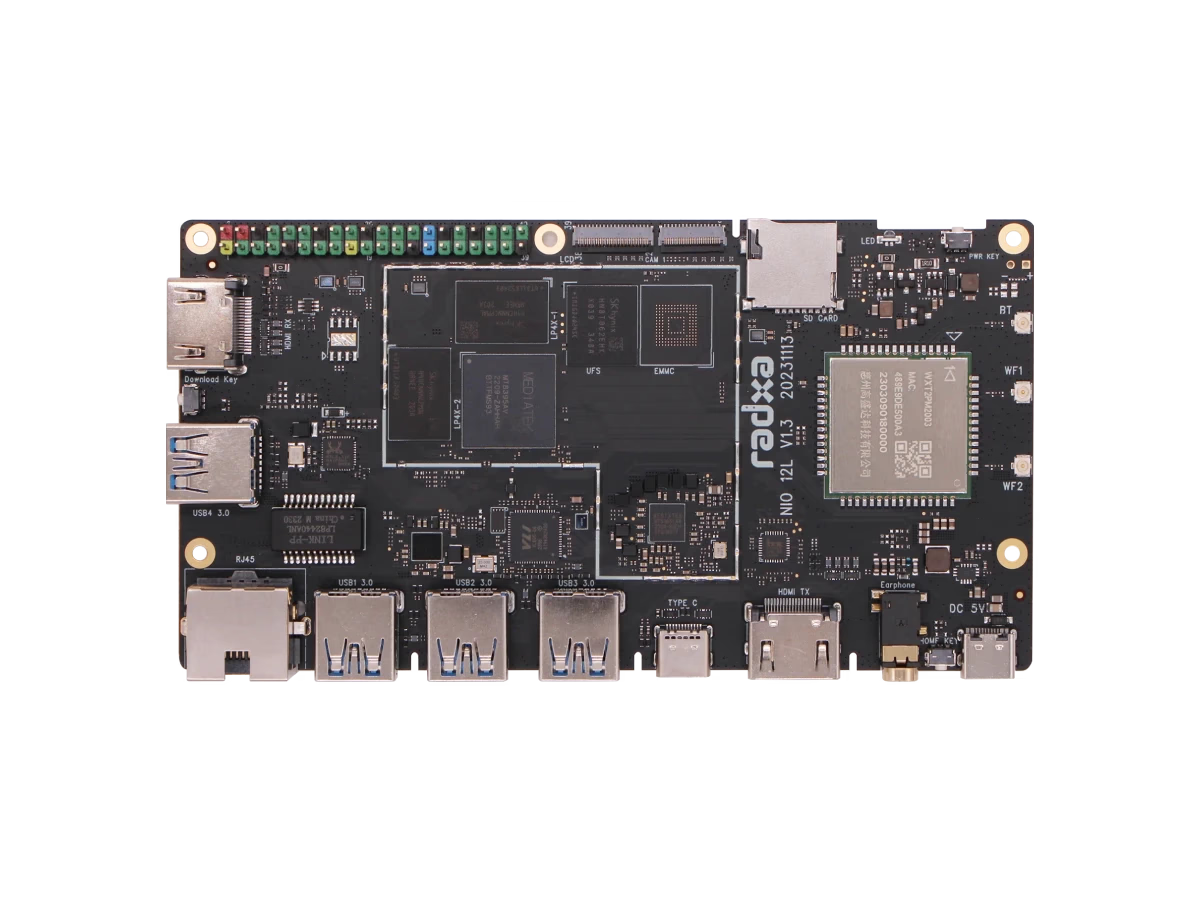
As of December 29, 2025, we could not find a dedicated product page or official documentation for the "Radxa NIO 5A" from Radxa official primary sources. This article organizes what we could verify about the NIO series positioning from primary sources, how to find purchase options through official distributor listings, and the checklist of unverified items from an SBC perspective.