ODROID-C5: A $39 SBC with USB 2.0 Only but Optimized for Low-Power 4K
Hardkernel has released the ODROID-C5. Powered by the Amlogic S905X5M, this $39 SBC emphasizes low power consumption, minimal heat generation, and 4K@60 output via HDMI 2.0. While it foregoes PCIe and USB 3.0, its 12V power input and heatsink-free design make it well-suited for embedded applications.
Hardkernel has released the ODROID-C5. Product information and sales page are available on the official store.
Powered by the Amlogic S905X5M, this $39 SBC emphasizes low power consumption, minimal heat generation, and 4K@60 output via HDMI 2.0.
While it has clear trade-offs with “no PCIe and no USB 3.0,” its 12V power input and heatsink-free design make it suitable for embedded applications. If you’re planning to primarily use USB 3.0 storage, you should consider a different SBC from the start.
| ■ ODROID-C5 | | | --- | --- | | CPU | Amlogic S905X5M (Quad-core Cortex-A55, up to 2.5GHz) |
| GPU | ARM G310 V2 (0.85GHz) | | Memory | DDR4 4GB (32-bit, 3200 MT/s) | |
Storage | microSD slot (UHS-I SDR104), eMMC socket (HS400) | | Wired LAN | Gigabit Ethernet (10/100/1000Mbps) | |
Video Output | HDMI 2.0 (up to 4K@60, HDR/CEC/EDID support) | | USB | 4x USB 2.0 Type-A, 1x micro USB (OTG) |
| Expansion | 40-pin GPIO, UART, IR receiver, analog audio pins, 2-pin auxiliary power | | Size/Weight |
85×56×22mm, approx. 42g | | Power | DC jack 5.5×2.1mm, 7.5-15.5V (12V/2A recommended) | | Supported OS | Android 14, Linux (distribution directory available) |
This is a low-power SBC combining Amlogic S905X5M + 4GB DDR4 + HDMI 2.0 4K@60 support in an 85×56mm board compatible with ODROID-C4.
While it’s not suitable for applications requiring high-speed I/O due to the lack of PCIe bus and USB 3.0, it’s a solid choice if you prioritize 4K display, low power consumption, and GbE connectivity.
Features
SoC and CPU
The heart of the ODROID-C5 is the Amlogic S905X5M. It features a quad-core Arm Cortex-A55 running at up to 2.5GHz, paired with an ARM G310 V2 GPU (0.85GHz). No independent accelerators such as NPU are mentioned in the official specifications.
The Cortex-A55 is a power-efficient core, making it better suited for stable operation of lightweight Linux or Android rather than heavy parallel processing. It’s well-matched for 4K video playback, media players, digital signage, and light home applications.
Power and Thermal Design
Power is supplied via a 5.5×2.1mm DC jack, accepting 7.5-15.5V with 12V/2A recommended. This differs from Raspberry Pi-style boards that typically use 5V power, so be careful if you’re planning to reuse existing 5V power supplies. A 2-pin auxiliary power input is also provided.
The thermal design is based on a “heatsink-free” premise, and Hardkernel describes this as their first “heatsink-free” model. The official documentation states that no throttling issues occurred even after over 2 hours of stress testing inside a case. With stated power consumption of approximately 1W at idle and 2.5W under CPU stress, it’s easy to estimate power and thermal requirements for embedded or always-on applications.
Storage and Boot
Storage consists of a microSD slot (UHS-I SDR104 support) and an eMMC socket (HS400 support). There’s no onboard storage, so you’ll need to prepare a microSD card or eMMC module separately.
Official write/recovery procedure URLs are mentioned as Wiki links on the official store, but the Wiki content itself couldn’t be accessed.
Expansion and I/O
An important note: the ODROID-C5 lacks both PCIe bus and USB 3.0. The official store explicitly states that “the SoC design doesn’t include PCIe bus.” The presence of an M.2 slot isn’t mentioned in the official specifications, so it’s safe to assume it’s not included.
This board isn’t suitable from the start for mini-NAS applications centered on USB 3.0 storage or applications requiring NVMe SSDs. Conversely, if “USB 2.0 is sufficient” and you’re connecting reliably via GbE, this limitation is acceptable.
The 40-pin GPIO header is included, with GPIO voltage specified at 3.1V nominal and 3.4V maximum input tolerance. Pay attention to voltage levels when connecting peripherals or sensors designed for 3.3V.
Network and Video
Network connectivity is GbE (10/100/1000Mbps), with LED behavior for different link speeds detailed in the specifications. Video output is HDMI 2.0 with up to 4K@60, HDR, CEC, and EDID support. This specification directly supports 4K display and 4K video playback applications.
However, application and driver maturity depends on the OS distribution, so it can’t be guaranteed that “all applications will output 4K@60 just because it has HDMI 2.0.” Android 14 images are available in the official distribution directory, but Linux distribution images couldn’t be confirmed as the Wiki content wasn’t accessible.
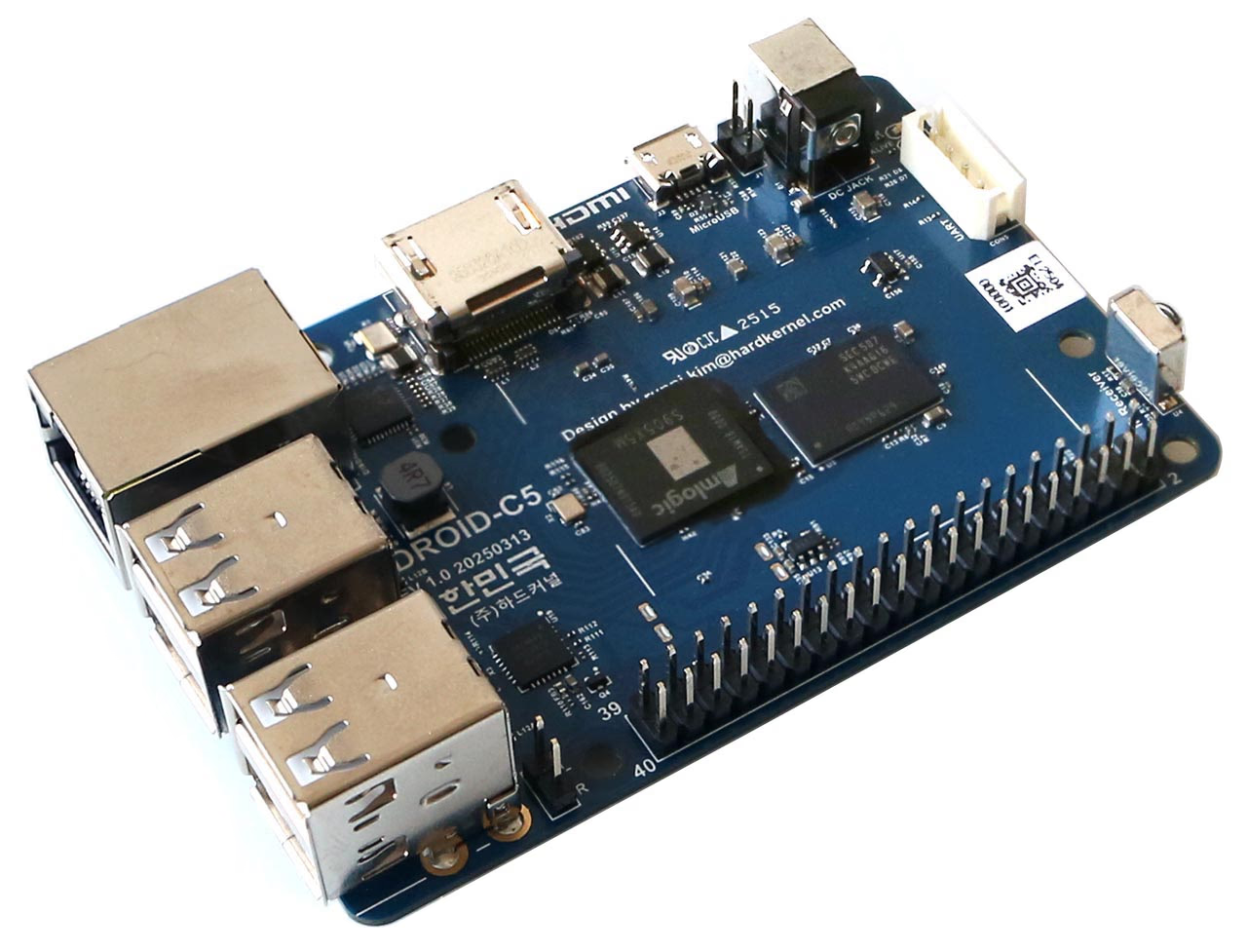
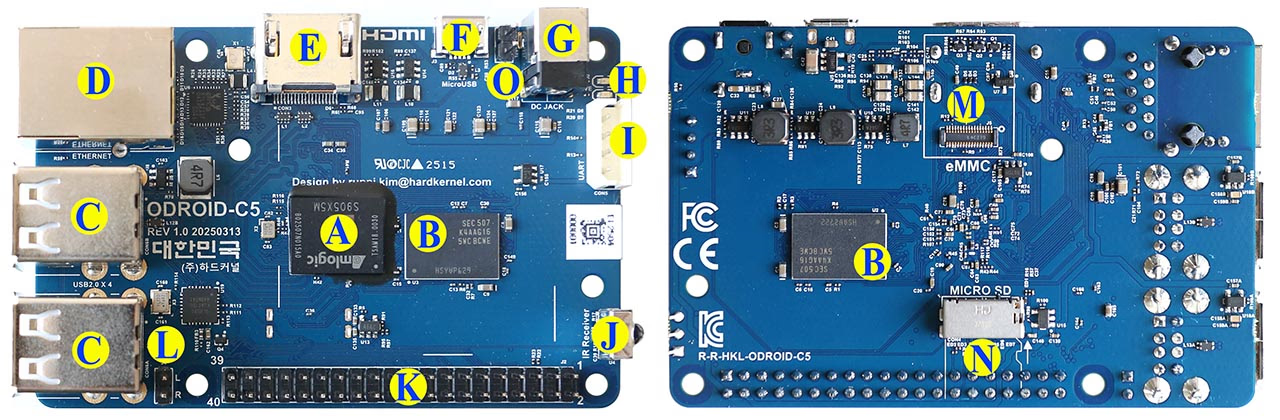
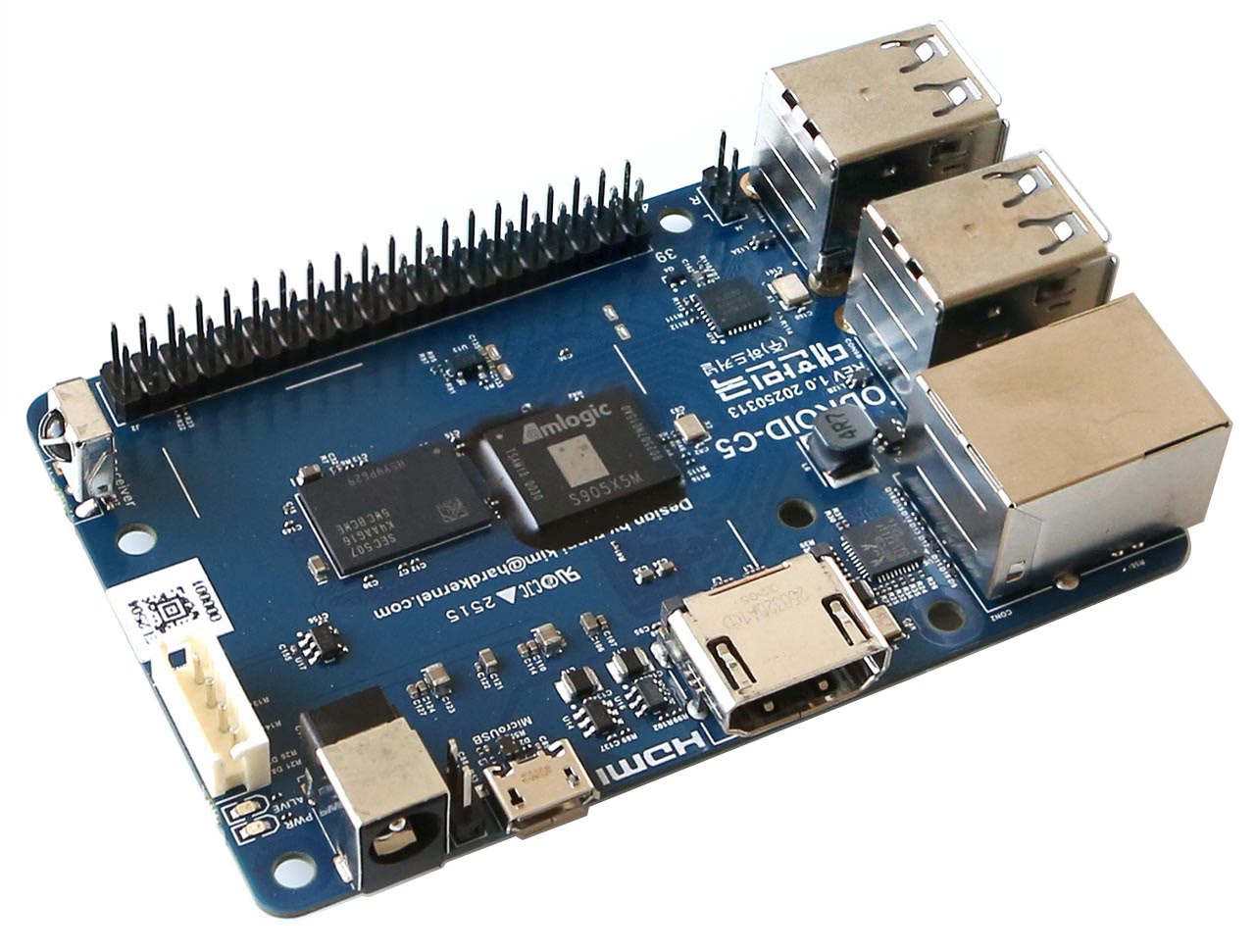
The board top view shows the SoC (Amlogic S905X5M) and memory (DDR4 4GB) placement. The DC jack, HDMI, and micro USB (OTG) are lined up on the right side, while the RJ45 and USB port cluster are grouped on the left. The microSD slot and eMMC module socket are also visible on the board.
The RJ45 (GbE), USB Type-A ports, HDMI, and DC jack are concentrated on one edge. With I/O clustered on one side, it’s easy to handle for wall-mounted enclosures or when you want to keep wiring short. It’s also a nice bonus that connector positions are identical to ODROID-C4, allowing reuse of C4 cases and many expansion boards.
The micro USB is documented for OTG use and is not explicitly mentioned as a power input.
Summary
The ODROID-C5 is an SBC built around the S905X5M + 4GB DDR4, emphasizing “low power and minimal heat” alongside “4K@60 via HDMI 2.0.”
It’s well-suited for applications prioritizing 4K display, low power consumption, and GbE connectivity. Specifically, digital signage, media players, lightweight home servers, and embedded terminals are good fits. The 12V power input and heatsink-free design also complement embedded-oriented applications.
Conversely, it’s not suitable for applications that rely heavily on USB 3.0 storage or NVMe SSDs. With the explicit lack of PCIe bus and USB 3.0, choosing this for high-speed I/O purposes would be a selection mistake. Consider other SBC lines with explicit PCIe and M.2 support instead.
The price is US$39.00 on the official store. Note that taxes, duties, and customs fees may apply separately.
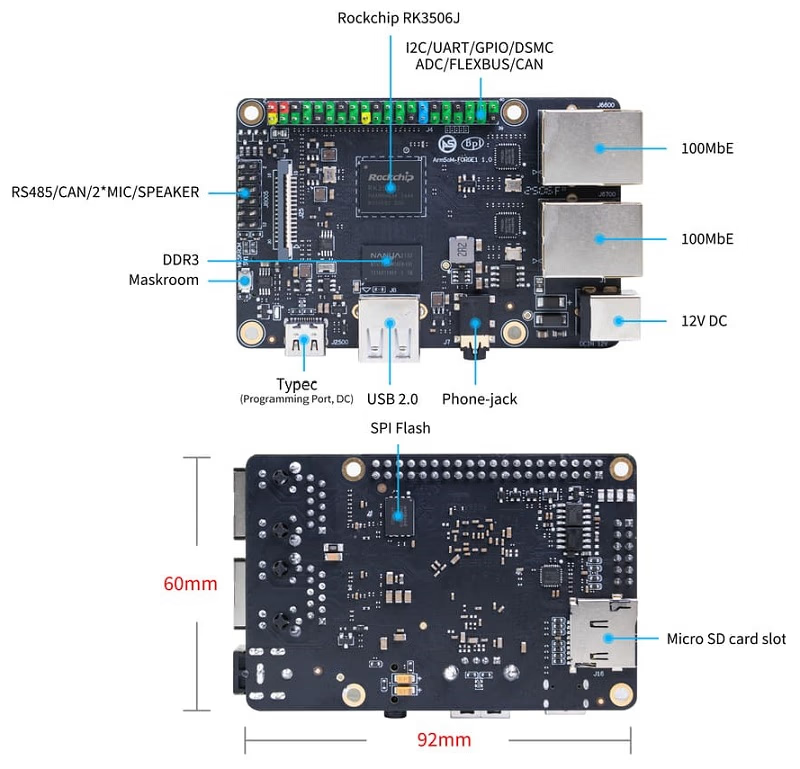
Banana Pi (BPI team) has announced the public sale of the "Banana Pi BPI-Forge1." Powered by the Rockchip RK3506J (Arm Cortex-A7 triple-core), this compact SBC features dual 100MbE ports and control-oriented I/O. While it is clearly targeted at embedded use cases with Buildroot as the primary OS, the 512MB memory and some unconfirmed expansion specifications require careful consideration of your intended use case.
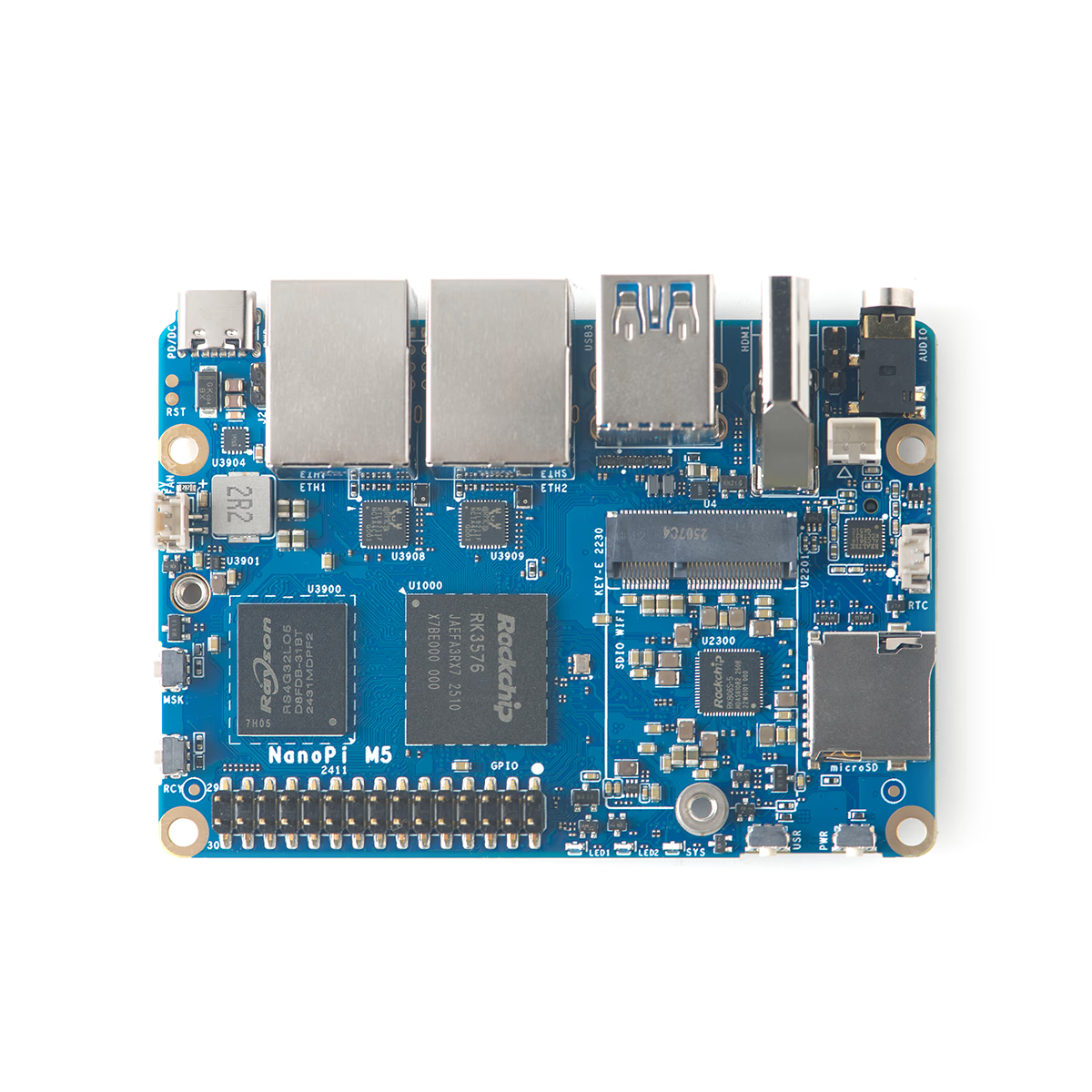
The NanoPi M5 from FriendlyElec is a compact 90×62mm SBC powered by the RK3576 with a 6 TOPS NPU, dual 1GbE ports, and an M.2 NVMe slot. With USB-C power input (6–20V, PD/DC), it offers flexible power options—ideal for router, NAS, or edge AI applications.
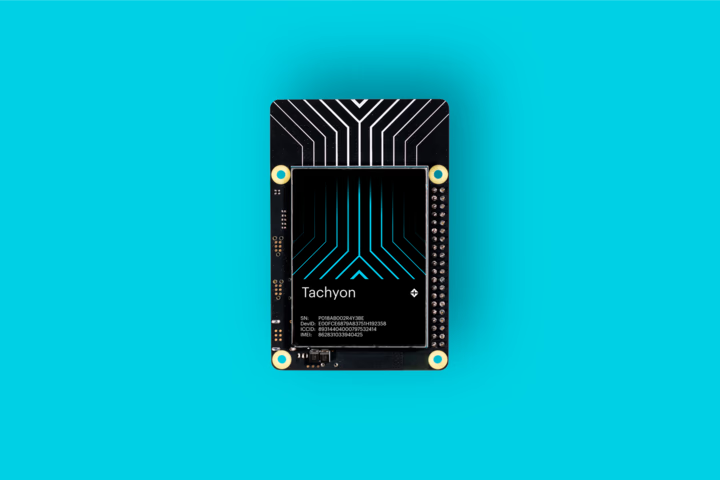
Particle's "Tachyon" is an SBC powered by the Qualcomm QCM6490 (Snapdragon 778G equivalent), condensing 5G connectivity, a 12TOPS NPU, and battery operation into a Raspberry Pi-sized board. With built-in antennas, it excels in field deployments, and its starting price of $249 makes it an attractive option.
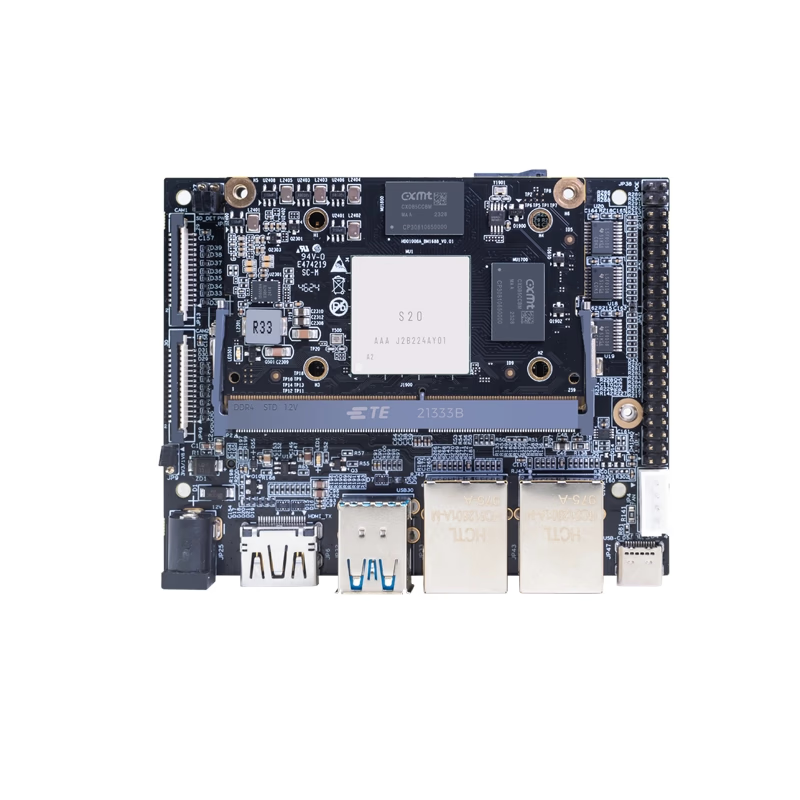
Banana Pi has released product information for their AI-focused core module "Banana Pi BPI-SM9". Equipped with SOPHGO BM1688 and rated at up to 16 TOPS (INT8), the official documentation emphasizes video analytics applications such as decoding and analyzing multiple HD video streams. However, there are inconsistencies in official sources regarding power (5V/12V), dimensions, and GbE port count, so verify whether you are purchasing the module alone, IO board, or kit before ordering.