Axiomtek KIWI330: Ultra-Compact 1.6-inch Class SBC with LPDDR5 & NVMe
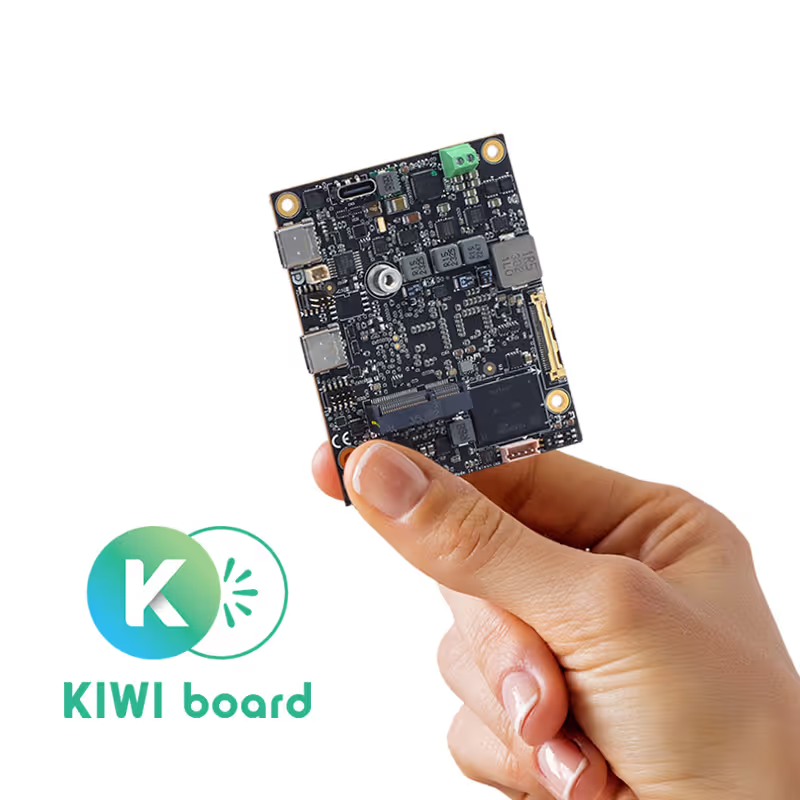
The Axiomtek KIWI330 is an SBC featuring Intel Amston Lake/Alder Lake-N processors packed into a tiny 72×56mm form factor. With onboard LPDDR5 memory and NVMe storage, it delivers both power efficiency and high performance.
Axiomtek has announced the KIWI330, an ultra-compact 1.6-inch class SBC.
Despite its tiny size, it features the latest Intel Amston Lake/Alder Lake-N processors, providing a powerful option for edge AI and industrial gateways where space is at a premium.
This is an extremely high-density board that packs Intel’s latest entry-level mobile SoC and high-speed storage into a size smaller than a business card.
Features
CPU / SoC
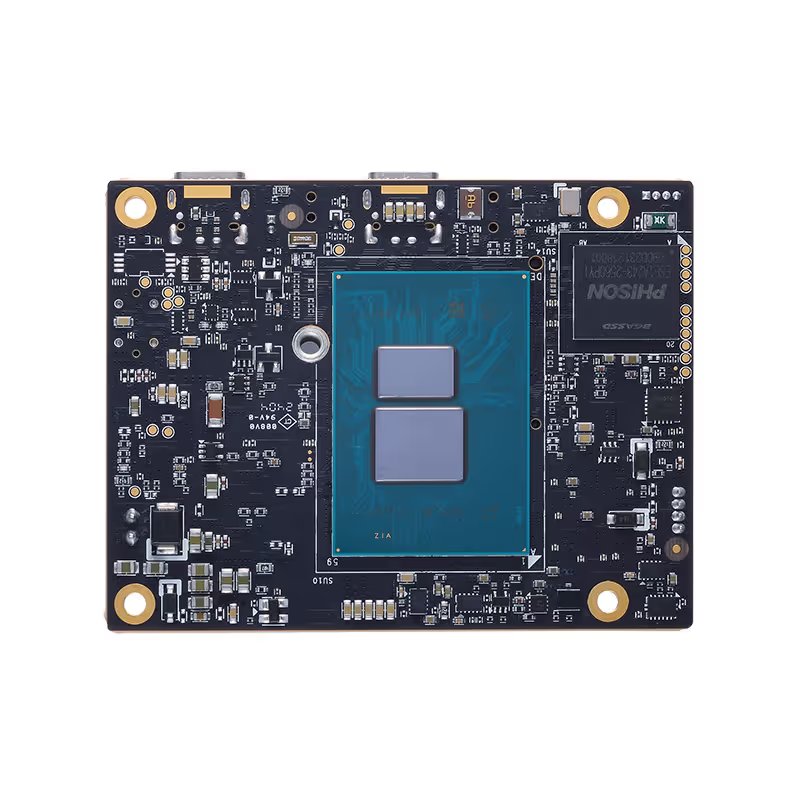
The board uses Intel Amston Lake / Alder Lake-N (such as N50 or x7211RE) SoCs. These are based on power-efficient cores (E-cores) manufactured on the “Intel 7” process, delivering practical computing performance at extremely low power consumption.
The thermal design makes fanless operation well within reach, making it suitable for noise-sensitive environments or installation in sealed enclosures.
Memory and Storage
What’s particularly noteworthy is that this tiny board comes with 4GB LPDDR5 and 64GB NVMe (BGA-mounted) onboard. Compared to eMMC, which has been mainstream in conventional small boards, this promises dramatically faster disk I/O, contributing to faster OS boot times and improved responsiveness.
However, since all components are soldered to the board, later upgrades or replacements are not possible.
Connectivity & Interfaces
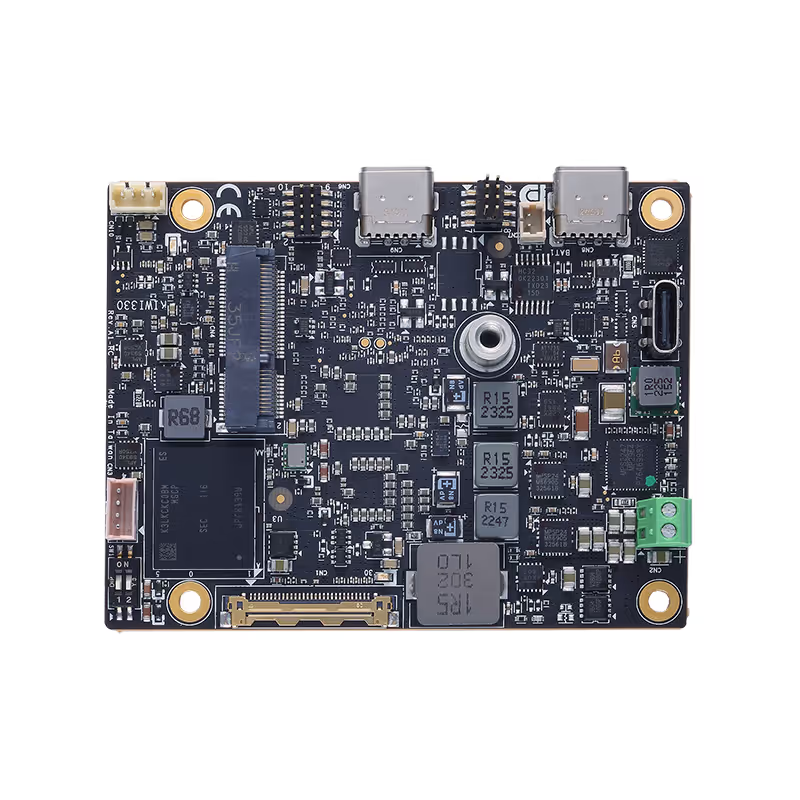
In its standard configuration, the board lacks a wired LAN port. When networking is required, users must either add a Wi-Fi/BT module to the M.2 Key E 2230 slot or connect an adapter via the USB-C port.
For video output, in addition to the eDP header, the USB 3.2 Type-C port supports DisplayPort Alt Mode, enabling modern display connectivity.
Appearance
While the standout feature is definitely its compact size, the adoption of Phoenix connectors for 12V power input demonstrates Axiomtek’s commitment to industrial-grade reliability.
Conclusion
The Axiomtek KIWI330 is a board that addresses the specific need for an x86-based solution that’s extremely small yet responsive.
Thanks to the onboard NVMe—a premium specification—it offers a level of comfort that stands out among small boards in this class.
However, the lack of wired LAN and the fixed 4GB memory capacity may be limiting factors depending on the application. It will shine brightest when deployed as a wireless-centric gateway or as a dedicated terminal for specific tasks.
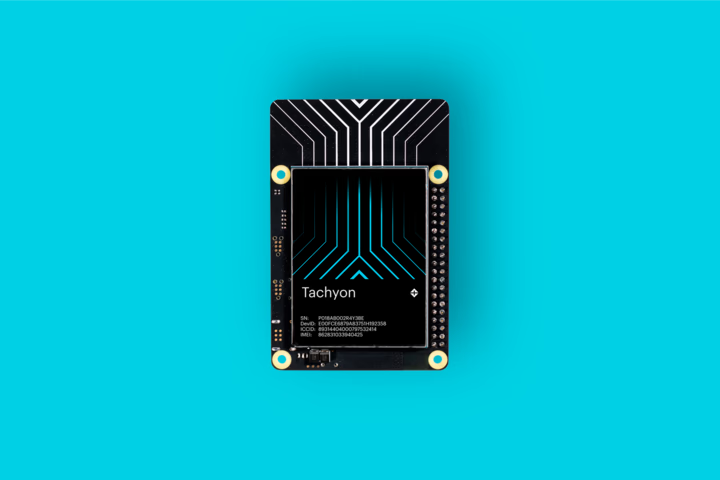
Particle's "Tachyon" is an SBC powered by the Qualcomm QCM6490 (Snapdragon 778G equivalent), condensing 5G connectivity, a 12TOPS NPU, and battery operation into a Raspberry Pi-sized board. With built-in antennas, it excels in field deployments, and its starting price of $249 makes it an attractive option.
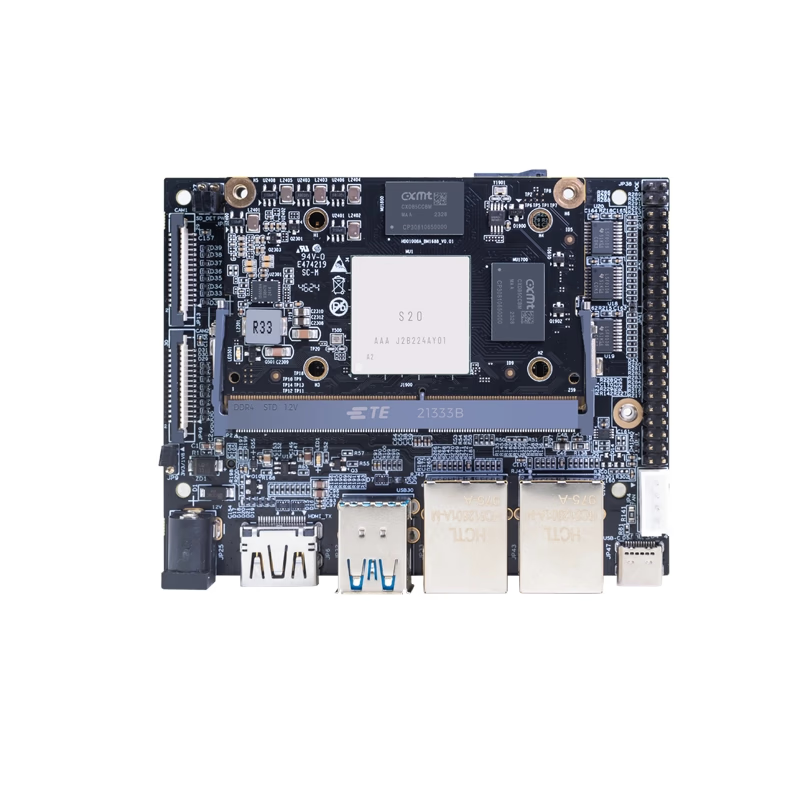
Banana Pi has released product information for their AI-focused core module "Banana Pi BPI-SM9". Equipped with SOPHGO BM1688 and rated at up to 16 TOPS (INT8), the official documentation emphasizes video analytics applications such as decoding and analyzing multiple HD video streams. However, there are inconsistencies in official sources regarding power (5V/12V), dimensions, and GbE port count, so verify whether you are purchasing the module alone, IO board, or kit before ordering.
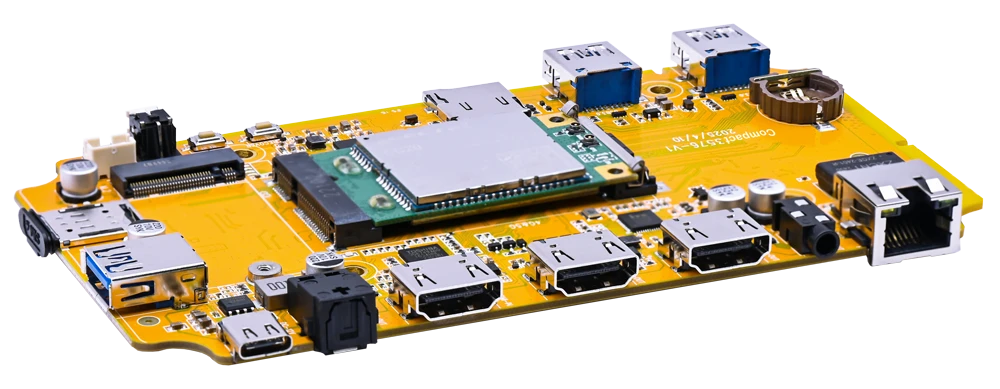
Boardcon Embedded Design has announced the Boardcon Compact3576, featuring the Rockchip RK3576. This modular design separates the SoM and baseboard, targeting mass production and derivative board development. However, at the time of writing, official page information was insufficient, so verifying power, boot, and expansion details before purchase is essential.
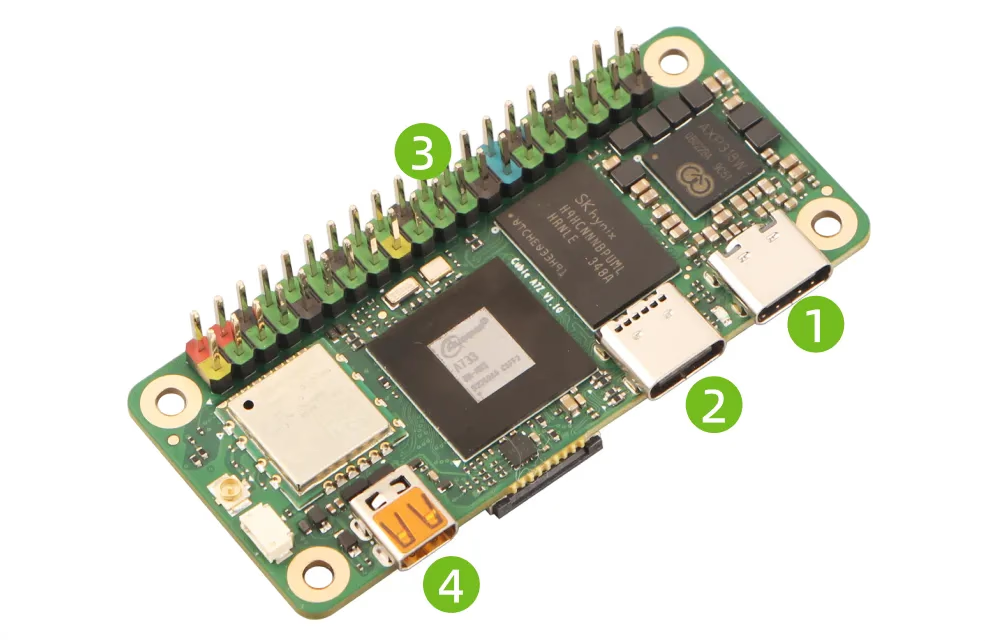
Radxa has published the product page and official documentation for the "Radxa Cubie A7Z." This ultra-compact SBC packs an Allwinner A733 (Cortex-A76×2 + Cortex-A55×6) and a 3 TOPS-class NPU into a 65×30mm form factor, complete with Wi-Fi 6 and Micro HDMI. However, wired LAN and M.2 require expansion, and PCIe is limited to Gen3 x1 via FPC, so checking whether it fits your use case beforehand is recommended.